Cart
0
You may also like


The choice between a chapel veil and a cathedral veil is one of the quietest but most defining decisions in a bridal wardrobe. Both lengths are rooted in tradition. Both flatter a wide range of silhouettes. The difference lies in how each veil moves down the aisle, how it frames the face in photographs, and how it pairs with the gown and the venue. This guide answers "chapel vs cathedral veil" in detail so you can choose with confidence, drawing on the way a bride actually wears the piece on the day rather than simply comparing numbers on a size chart.
At Tara Bridal our atelier in Hanoi shapes each cathedral length wedding veil and chapel length veil by hand in fine tulle, with lace, floral, and embroidered options cut to suit the gown it will accompany. The guidance below reflects what we see brides choose when they try both lengths in person.
A chapel veil is cut to approximately 90 inches from the comb, which brings the hem to the floor or just past the hem of a full length gown. The veil finishes at roughly the same place the gown finishes. There is no pronounced train, only a soft pool of tulle that settles behind the bride when she stands still. The silhouette stays graceful and compact. A chapel veil will always suit a bride who wants the presence of a long veil without the commitment of a trailing length.

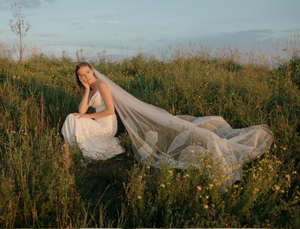
A cathedral veil is cut to approximately 108 to 110 inches from the comb. That places the hem well beyond the gown, producing a trailing length that sweeps the aisle. The train moves with the bride as she walks and pools behind her during the altar ceremony. A cathedral length is the most photographed veil length in bridal editorials for this reason. It sculpts a visible line from the back of the head through the length of the gown and out onto the floor.
For brides drawn to the cathedral register who want more drama, a royal cathedral veil measures approximately 120 to 130 inches. The extra length exaggerates the trailing effect and reads as unmistakably ceremonial. Royal cathedral is usually reserved for formal religious venues with long aisles, or for brides who want the veil to appear equally prominent in the gown and in the portraits, as with the KYLIE royal cathedral floral lace veil.

Chapel and cathedral veils drape differently from the moment the comb is placed. A chapel veil falls in a single soft column that mirrors the shape of the gown. It moves with the bride in a quiet way, catching a small amount of air at the hem when she turns. It reads as intimate in close frames and keeps the focus on the face, the neckline, and the embroidered details at the bodice. In a narrow church or a small ceremony room, a chapel veil feels appropriate to the scale of the space.
A cathedral veil moves in a different register. When the bride walks, the trailing length lifts slightly behind her in a slow, deliberate way that reads almost like fabric sculpture. In photographs taken from behind, the veil draws a line that carries the eye from the back of the head to the far edge of the train. At the altar, the veil fans out around the hem of the gown, which is the effect most couples associate with classical bridal imagery. Cathedral photographs beautifully in wide shots and in backlit frames, where the tulle catches light and takes on a luminous quality.

Veil length is at its most flattering when it is chosen in relation to the gown. The silhouette of the dress sets the visual context for the veil.
A-line gowns flatter both lengths. A chapel veil sits neatly along the soft flare of the skirt and echoes its line, which reads as balanced and composed. A cathedral veil extends past the skirt and provides a clear contrast between the structured bodice and the trailing tulle. Brides who want their gown to read as the primary element of the look often pair an A-line with a chapel veil.
Ballgowns, with their full skirts and sculpted volume, sit most comfortably with a cathedral or royal cathedral veil. The length of the veil balances the visual weight of the skirt, and the trailing tulle completes the formal, architectural quality of the silhouette. A chapel veil on a ballgown can work, but it often disappears against the volume of the skirt and loses its presence in photographs.
Sheath and column gowns pair especially well with a cathedral veil. The long trailing veil introduces movement and softness to an otherwise clean, vertical silhouette. The contrast between the narrow gown and the wide fan of the veil creates the most cinematic frame for this dress shape. A chapel veil on a sheath reads modern and understated, and can suit brides who prefer a minimalist look.
Bias cut and slip gowns have a fluid, romantic register. Chapel length usually flatters these gowns best because the veil mirrors the soft vertical fall of the dress without overpowering it. A cathedral veil can be worn with a bias cut gown, but the softness of the gown asks for a lightweight tulle so the veil does not weigh the silhouette down.

The venue sets the physical and emotional scale of the day. A veil that suits the space will feel correct in every photograph and in every moment of the ceremony.
Intimate chapel ceremonies. A chapel veil is named for a reason. In a small chapel with a short aisle, a chapel veil sits at the right scale. A cathedral length can still be worn, but the train may need to be rearranged more frequently because the space is narrow.
Garden ceremonies. Chapel length is usually easier to manage on grass, gravel paths, and stone terraces. The veil will not catch on outdoor textures the way a long train can. If you love the drama of a cathedral veil outdoors, choose a simple hem and a lightweight tulle so the train floats rather than drags.
Beach ceremonies. Chapel length is the more practical choice for sand. A cathedral veil on a beach can look striking in still portraits, but the train will collect sand as the bride walks. Many beach brides choose a chapel length with a floral or embroidered edge so the detail sits close to the body, a pattern we cover in detail in our complete guide to beach wedding veils.
Grand cathedral and formal ballroom ceremonies. Cathedral and royal cathedral veils were made for these venues. The long aisle, the high ceilings, and the scale of the space ask for a veil that can fill the frame. Chapel length in a grand venue is still valid, and brides who want to read as elegant rather than theatrical will find it suits the architecture when the gown carries enough presence on its own.
A veil is often worn only for the ceremony and the first set of portraits, then removed for the reception. This is worth thinking through in advance because it affects the choice of length.
A cathedral veil is almost always removed before the reception. Dancing, dining, and mingling are easier without the trailing length, and the veil carries most of its visual weight during the processional and the altar moment. Many brides who choose cathedral plan to remove it after portraits and wear their hair down or redressed with a hair piece for the evening.
A chapel veil is easier to keep on through more of the day. Some brides wear it through the cocktail hour and remove it only for dancing. If you want the veil to appear in reception photography, chapel is the more wearable length for long evenings.
Some brides wear a cathedral veil for the ceremony and keep a shorter veil on hand to wear later. This is a styled decision rather than a necessity, and it allows the veil to function as two different pieces across one day.
Length interacts with every other design decision in the veil. A lace edged chapel veil and a lace edged cathedral veil do not read the same way, even when the lace is identical. Length changes how the eye reads the detail.
Plain tulle. A plain tulle cathedral veil is the most classical wedding image in existence. The long fall of unadorned tulle reads as ceremonial and timeless. A plain tulle chapel veil reads more quietly and suits brides who want their gown to speak first.
Lace edge. Lace along the hem of a chapel veil sits at the floor, where it draws the eye down toward the gown hem. Lace along the hem of a cathedral veil extends the lace pattern across the trailing train, which makes the detail more visible in photographs.
Floral appliques and three dimensional florals. Floral motifs can be placed at the crown, scattered throughout, or concentrated at the hem. On a chapel veil, flowers placed at the lower third of the veil create a contained, garden like frame around the bride, as seen across our floral wedding veils. On a cathedral veil, flowers scattered the full length create a trailing pattern that photographs in a painterly way.
Embroidery. Embroidered motifs, whether monograms, botanical lines, or custom symbols, read with more impact on a cathedral length because the embroidered surface is visible across the train, which is why our embroidered wedding veils concentrate at this length. On a chapel length, embroidery sits closer to the body and functions more as an intimate detail noticed at close range.
For guidance on how tulle, organza, and silk differ in hand, drape, and photographic behavior, see our wedding veil materials guide, which covers how each fabric responds to different veil lengths.
When a bride is still deciding between chapel and cathedral, these five questions almost always clarify the choice.
If your answers lean toward scale, formality, and ceremonial photography, a cathedral veil is the right choice. If your answers lean toward intimacy, ease, and a gown that already speaks for itself, a chapel veil is the right choice.
Veil length has always carried meaning beyond style. Cathedral length grew in popularity alongside formal religious ceremonies in grand architectural spaces, where the long train read as a gesture of ceremony and reverence. Chapel length became the preferred choice in smaller parishes and private chapels, where scale asked for something softer. Both lengths sit within a long history of bridal tradition. For a deeper look at the meaning of the veil in Christian tradition, including the symbolism of veiling and unveiling at the altar, read our full essay on the subject.
Every bride is a slightly different height. A 90 inch chapel veil on a bride of 5 feet 2 inches will pool at the floor more generously than on a bride of 5 feet 10 inches. A 108 inch cathedral veil will produce a shorter trailing length on a tall bride than on a shorter bride. If the exact trailing length matters to you, a custom cut is the right answer. Our atelier will cut any length to order so the veil ends precisely where you want it to end, whether that is exactly at the hem of the gown or trailing a measured distance behind it. You can explore the full range of cuts and details in the cathedral length wedding veil collection, where each style is available as made to order with adjustable length.
Chapel and cathedral are not better or worse than one another. They are two different emotional registers for the same piece of the bridal wardrobe. Chapel is close, composed, and intimate. Cathedral is expansive, ceremonial, and cinematic. The right length is the one that matches your venue, your gown, and the tone you want your day to carry. Both are rooted in tradition, both photograph with the quiet presence that only a handmade veil carries, and both will remain part of your wedding imagery for the rest of your life.
A chapel veil measures approximately 90 inches, which brings the hem to the floor or just past the hem of the gown. A cathedral veil measures approximately 108 to 110 inches and extends beyond the gown as a trailing length that sweeps the aisle. Chapel reads as quiet and composed. Cathedral reads as ceremonial and cinematic.
Both lengths are traditional, but cathedral is the length most often associated with formal religious ceremony and historical bridal portraiture. Chapel is equally rooted in tradition and has been the quieter, more wearable choice for generations of brides who wanted length without a trailing silhouette.
Yes. A cathedral veil is designed to move with you. The weight of quality tulle is soft enough that the train glides rather than drags. Most brides wear it comfortably for the processional, ceremony, and portraits. If you plan to move quickly during the reception, you can remove the veil or have a bridesmaid lift the train at key moments.
A chapel veil is absolutely appropriate for a formal wedding. Length is not the only measure of formality. A chapel veil in fine tulle with a delicate lace edge or hand placed floral motifs carries as much ceremonial weight as a cathedral length, simply in a softer visual register, as the LINDA chapel floral lace veil demonstrates.
A blusher is optional. Pairing a two tier cathedral veil with a blusher creates the traditional reveal moment as the bride lifts the front layer. A single tier cathedral veil with no blusher reads more modern and keeps the face unframed throughout the ceremony. Both are valid choices.
Cathedral photographs more dramatically in wide shots and walking portraits because of the trailing length. Chapel photographs more intimately in close frames because the veil sits closer to the body and echoes the shape of the gown. Many brides choose cathedral for aisle and altar photography and find that chapel flatters indoor reception images.
Yes. Some brides wear a cathedral veil for the ceremony and first portraits, then switch to a shorter veil or remove the veil entirely for the reception. Others wear their chapel veil all evening because the shorter length is easier to move in while dancing and dining.

Hoa is the founder and owner of Tara Bridal, bringing over seven years of experience in designing bespoke wedding veils for more than 3,000 brides worldwide. Passionate about helping brides shine with a unique style, she brings fresh ideas into each accessory, breaking traditional molds. Hoa understands the fatigue and time-consuming search that brides face when looking for wedding veils online, which is why she strives to create a seamless and enjoyable shopping experience. She creates stunning veils that beautifully reflect each bride's individuality by blending global fashion trends with exquisite hand embroidery from skilled Vietnamese artisans.