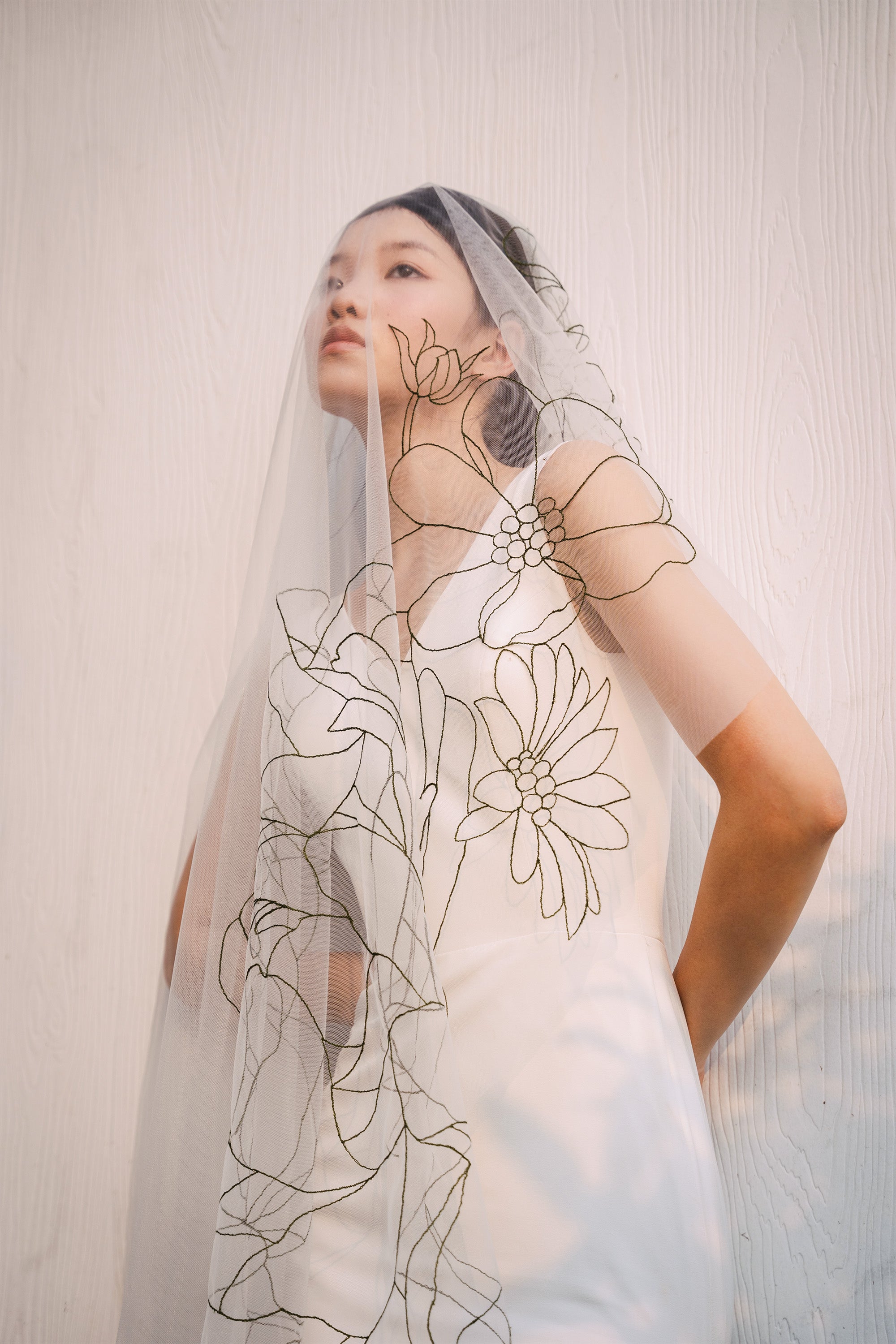
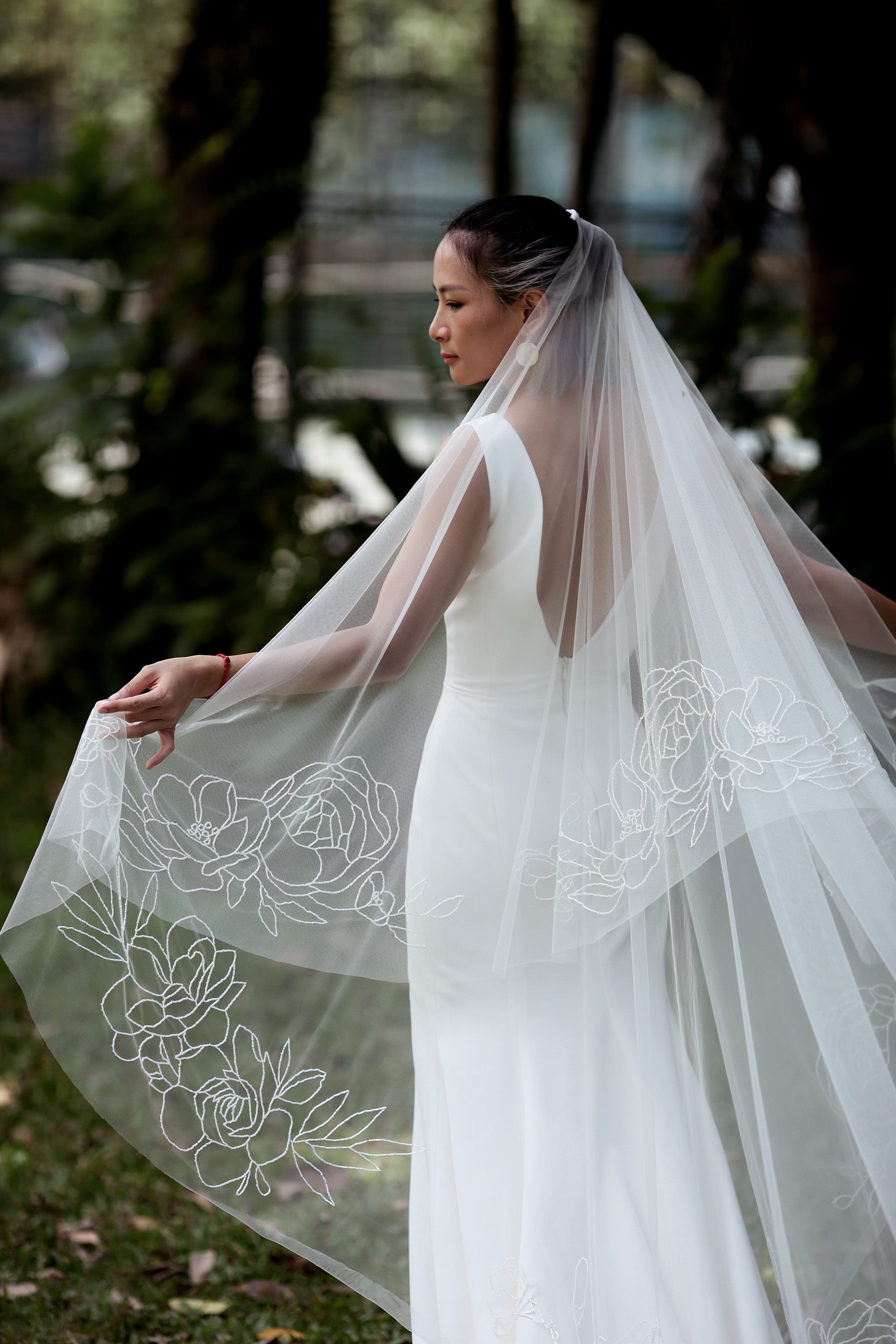
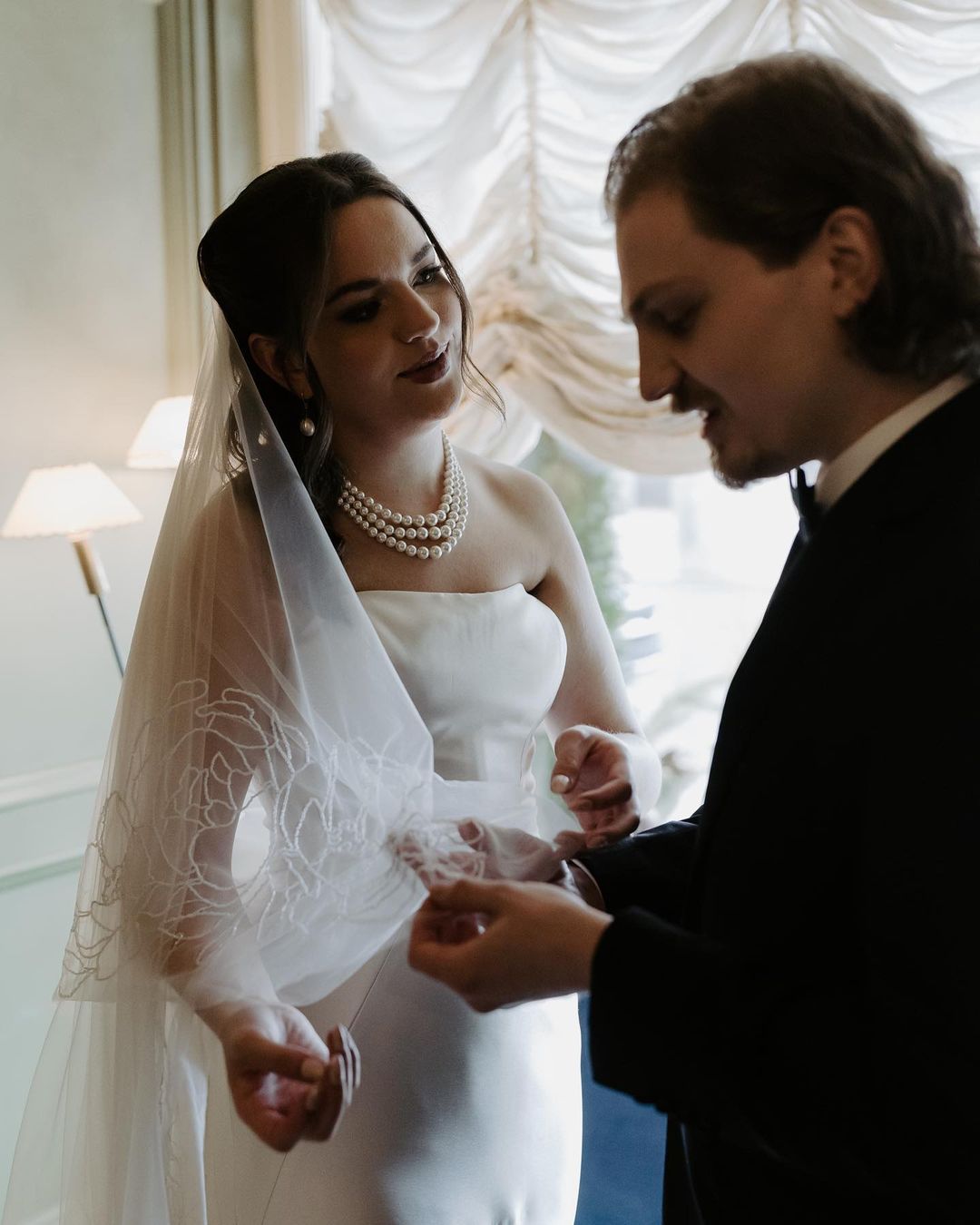
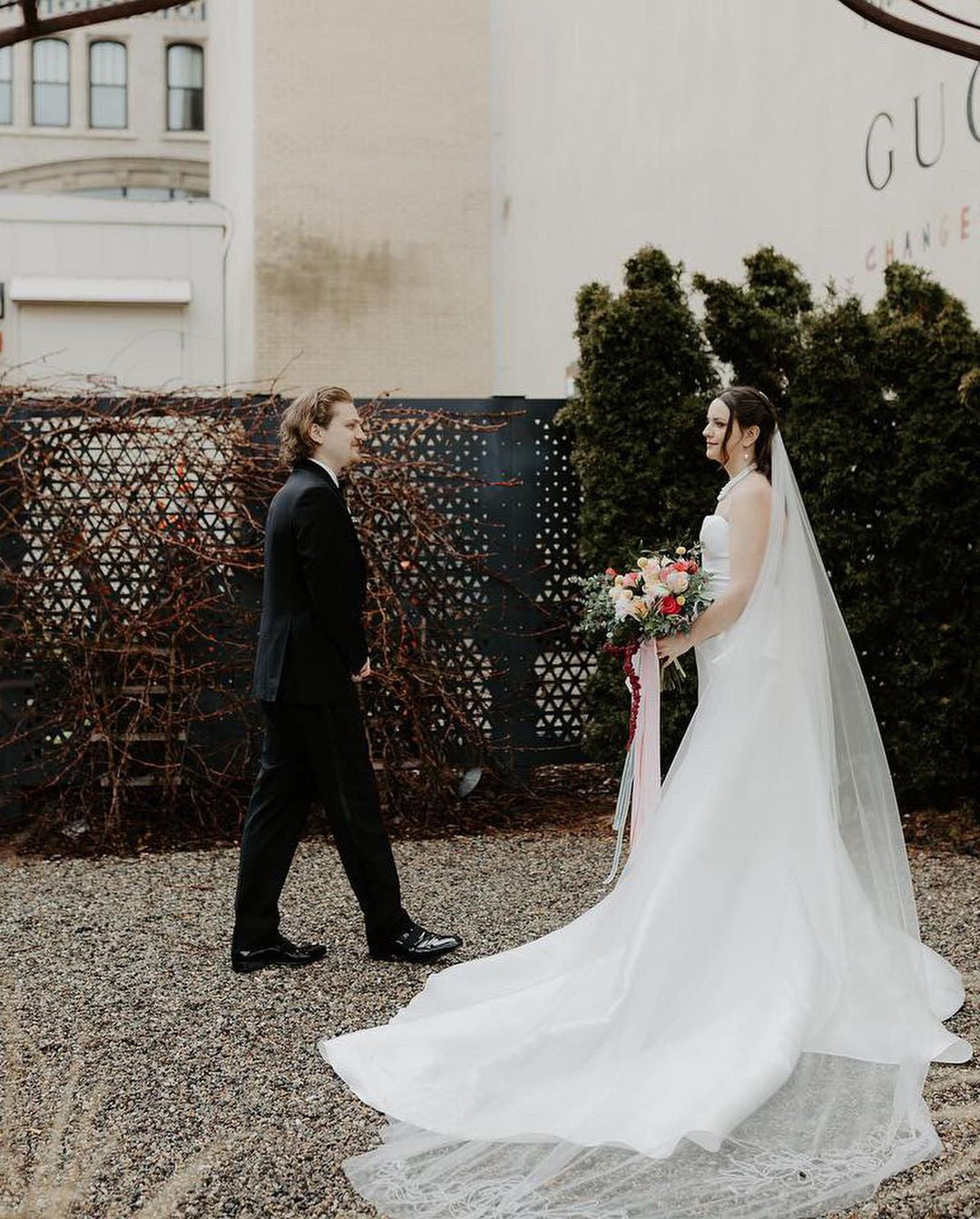
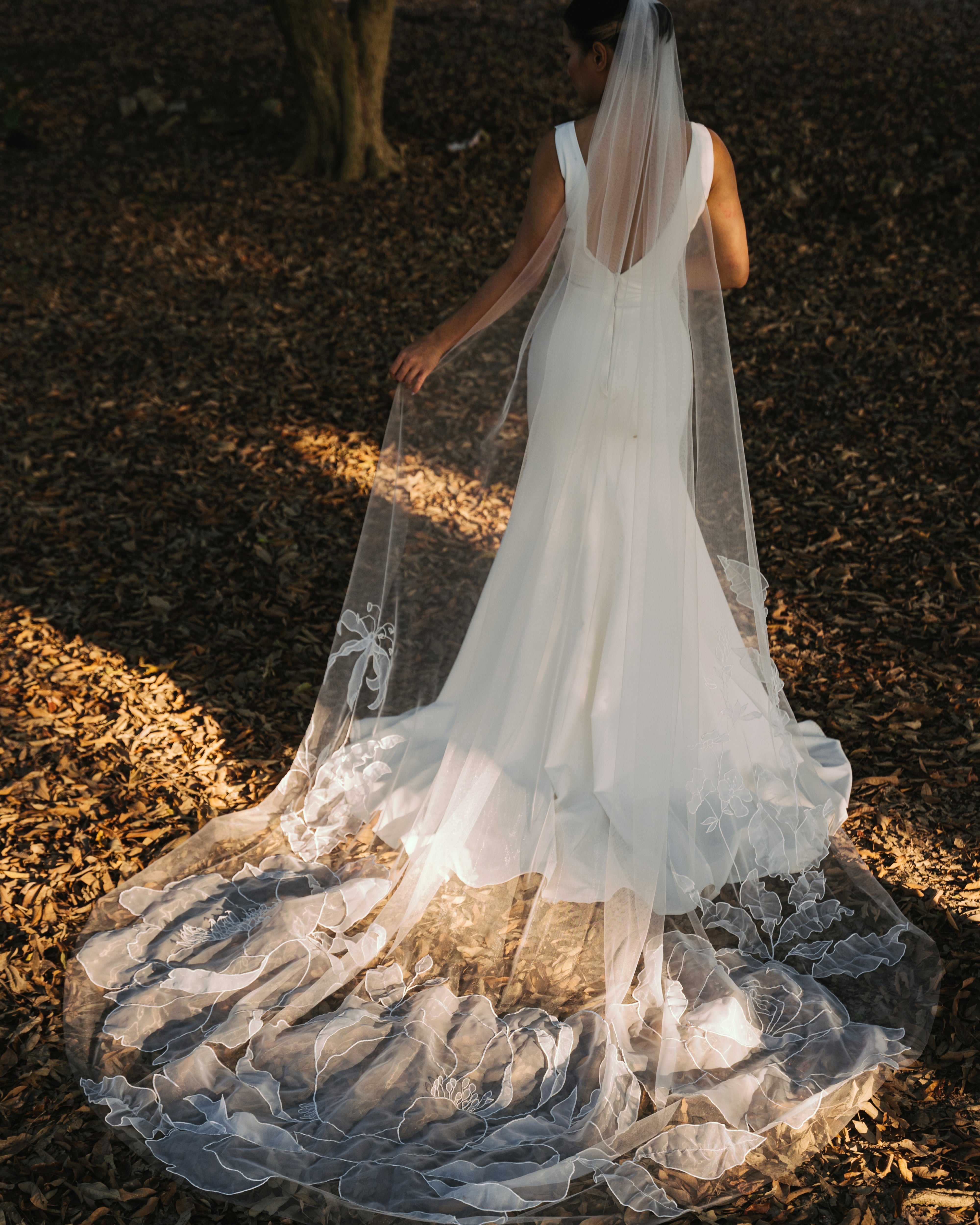
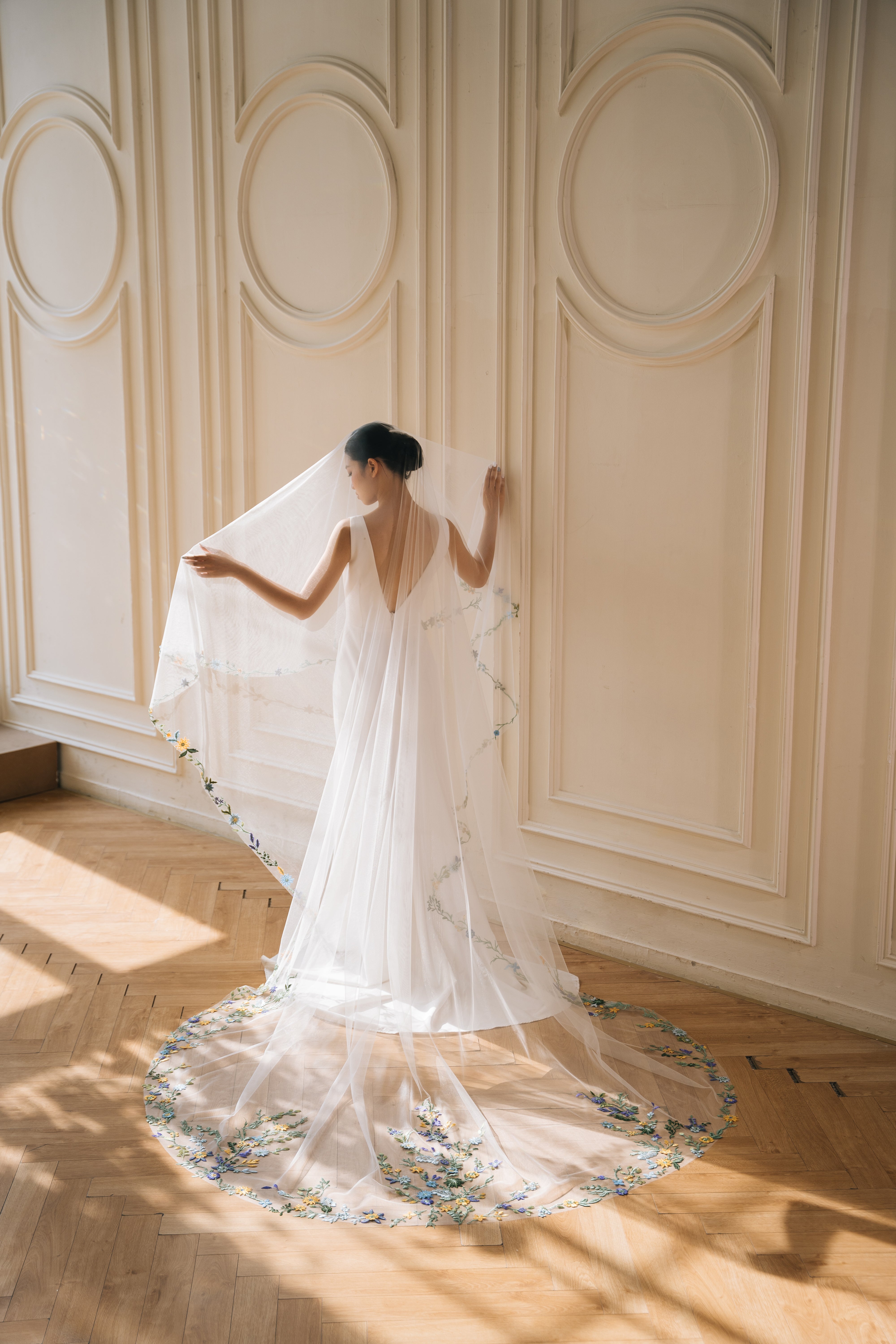
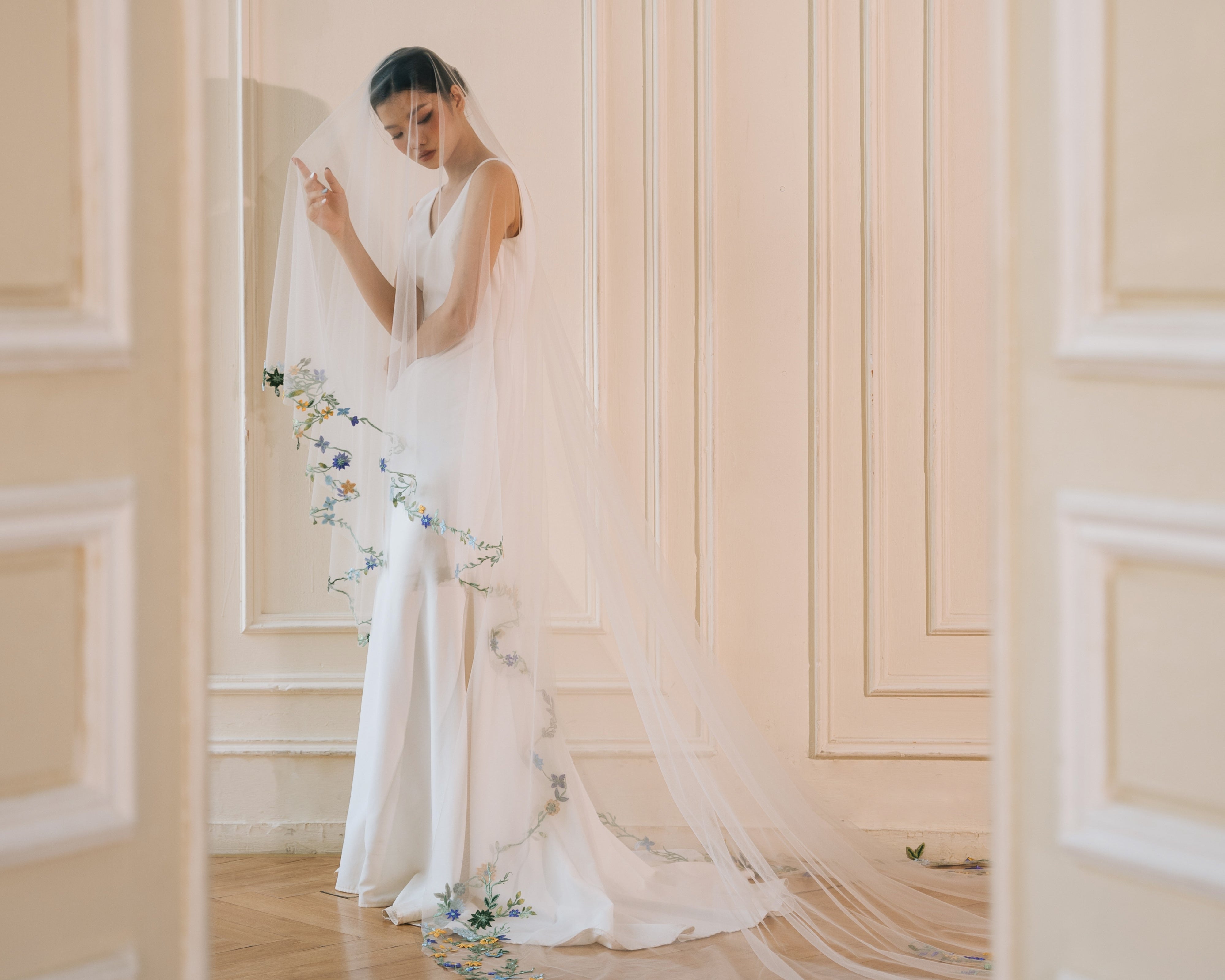
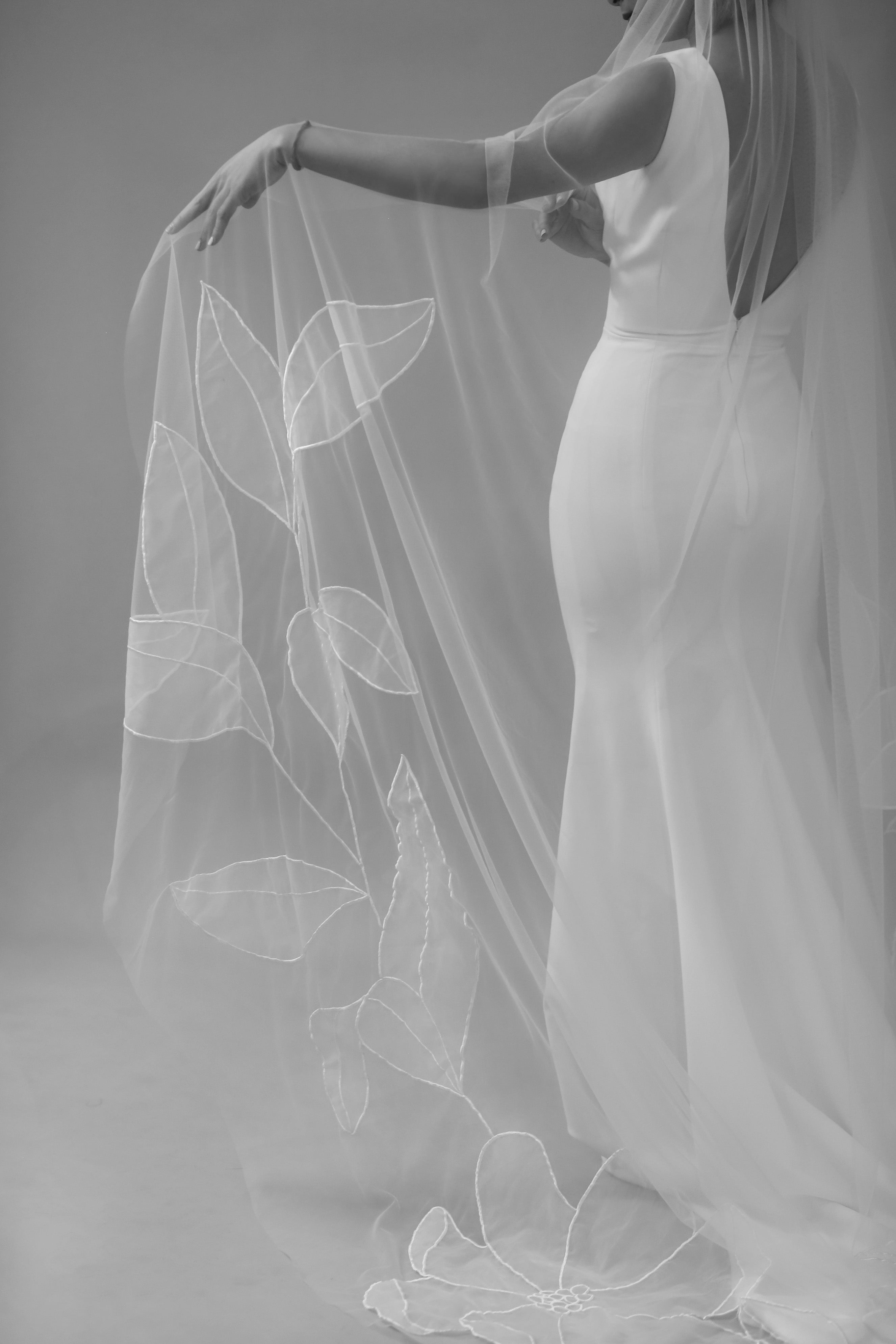
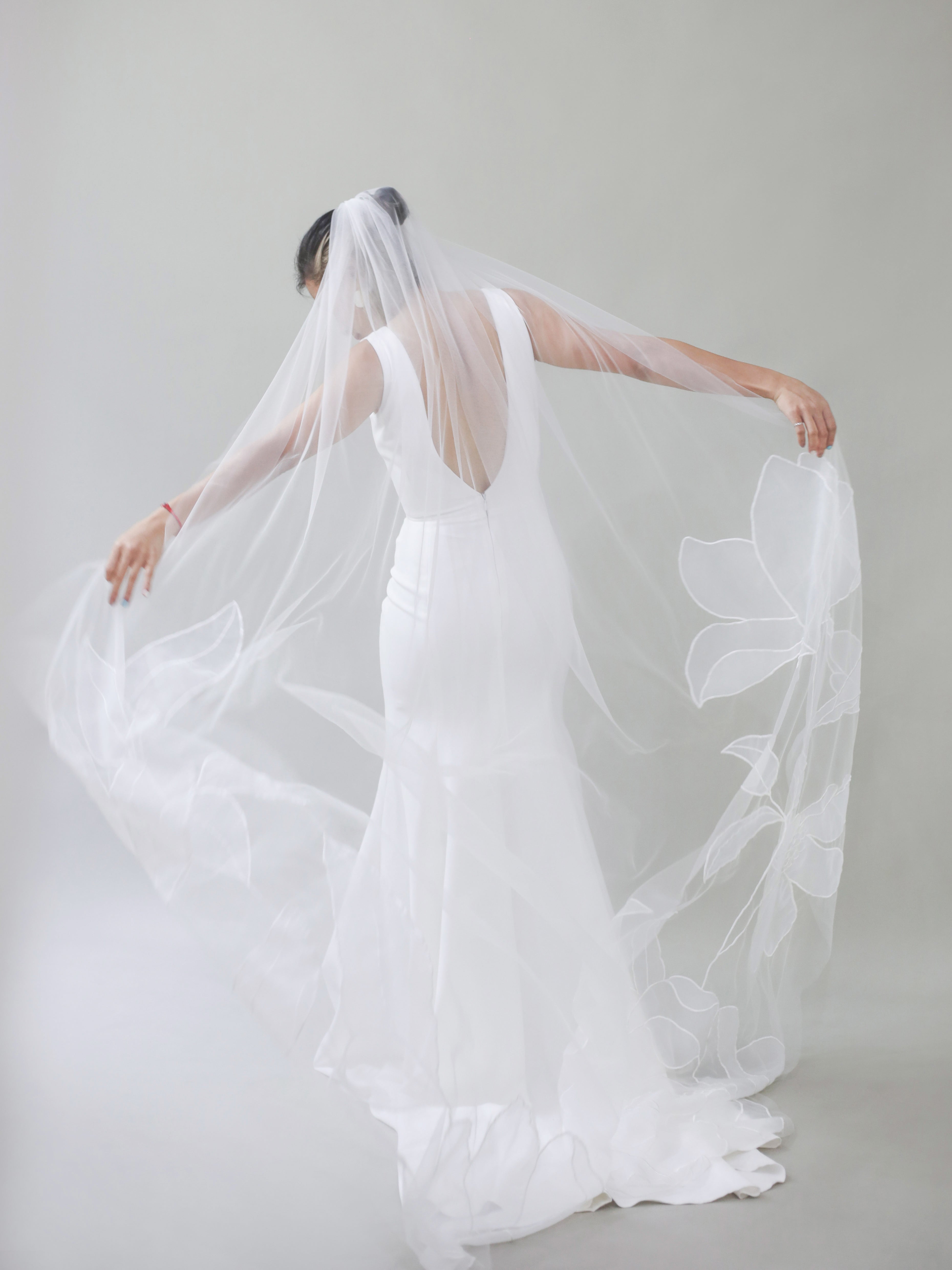
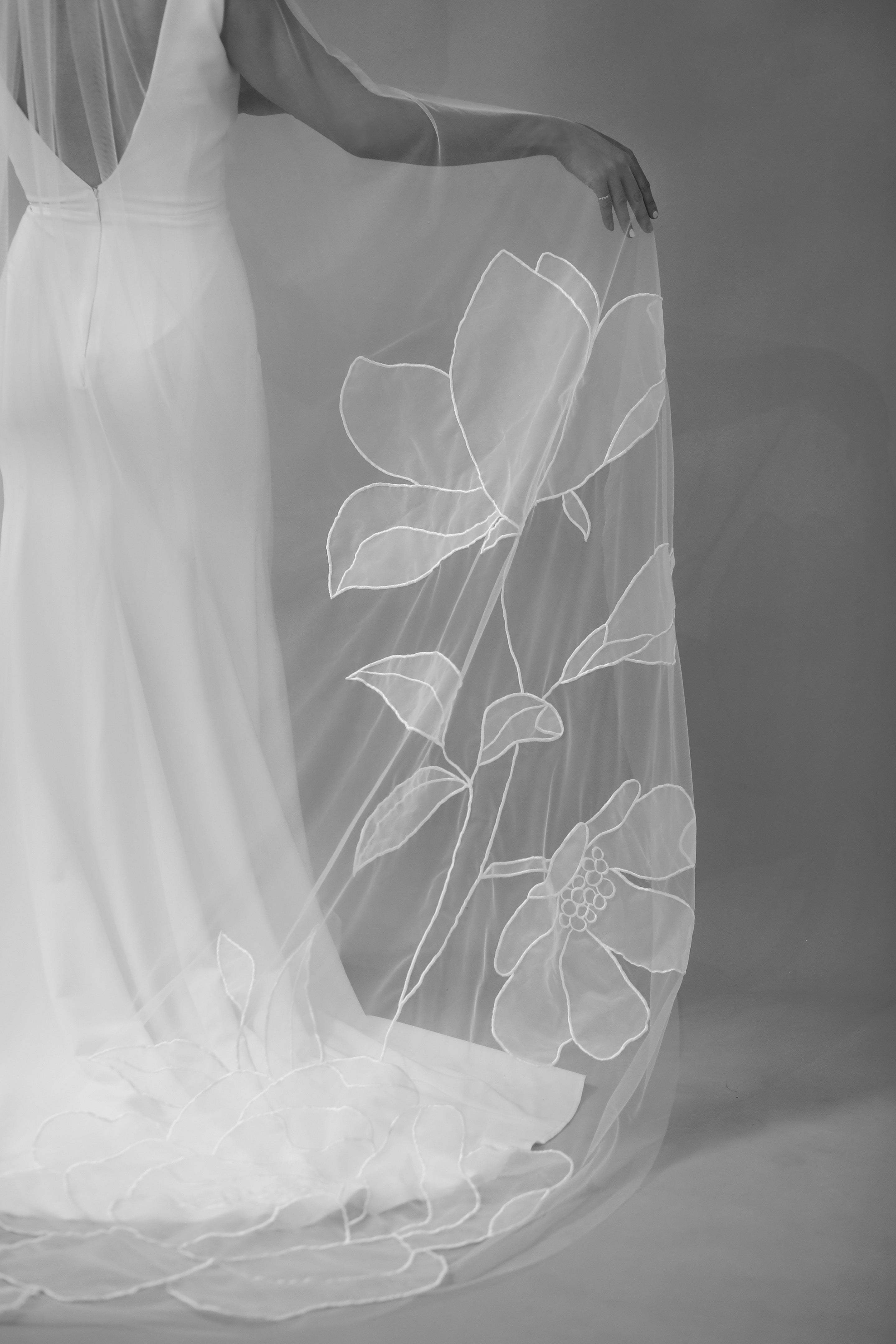
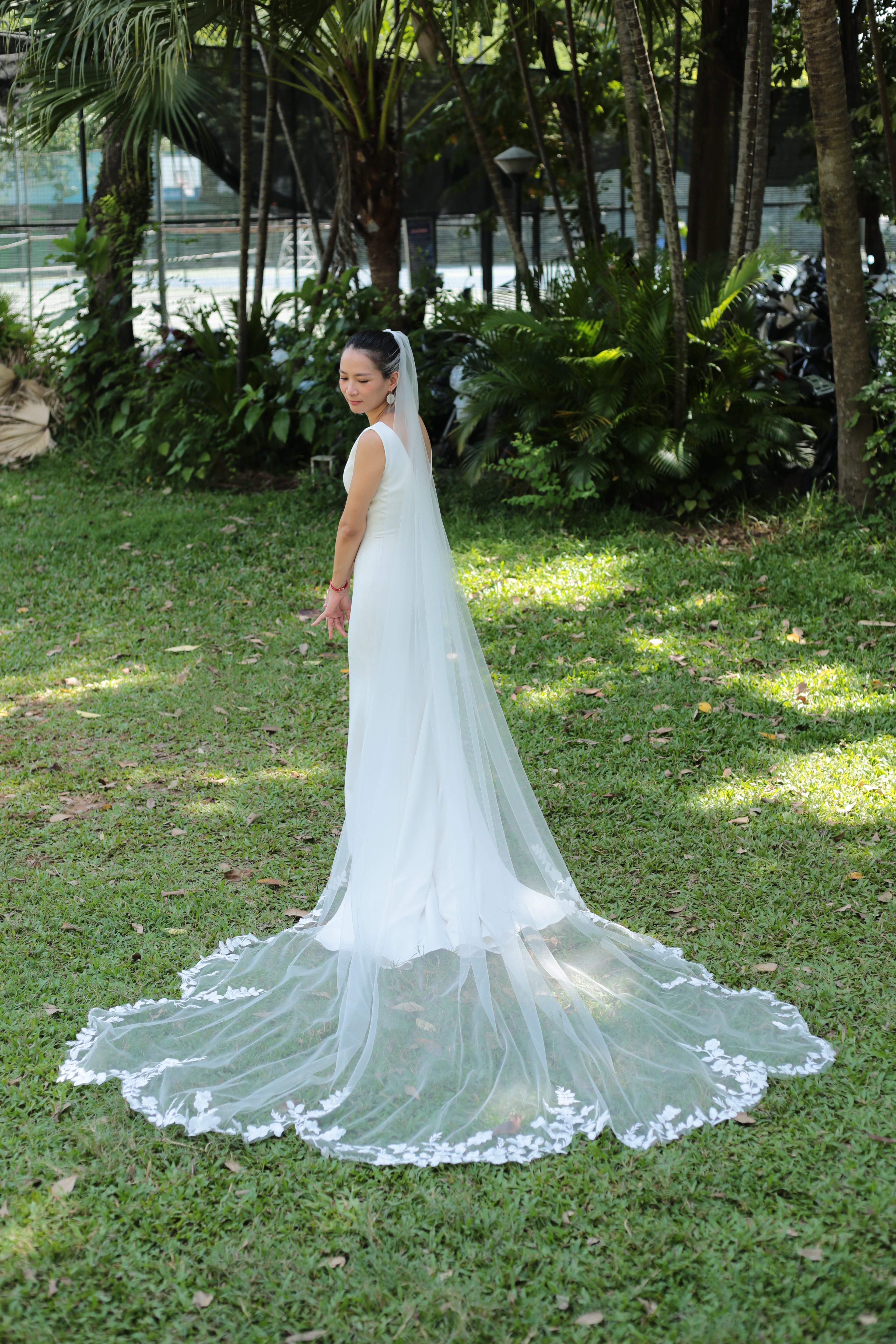
Wedding veils are the final note of a bridal look, the thing a guest sees as the music shifts and the doors open. At Tara Bridal we make wedding veils by hand in our Hanoi atelier, one bride at a time, and ship them worldwide to the address on your save the date. Every veil is cut, set, and finished to order, which means yours is not pulled from a shelf. It is made to your length, your colour, and the gown hanging in your closet. The collection below brings together cathedral sweeps, chapel drops, fingertip layers, lace borders, hand-painted florals, and embroidered scenes, all designed to move the way a veil should and to photograph the way you have imagined it.
If you are early in the search and want to understand how veils are constructed before you shop, our wedding veil materials guide walks through tulle weights, lace types, and edge finishes in the same vocabulary used at the cutting table. Otherwise, read on. The sections below are organised the way our brides shop in real life: by length, by style, by how the veil attaches to the hair, by colour, and by the venue you are walking through.
How a Tara Bridal wedding veil is made
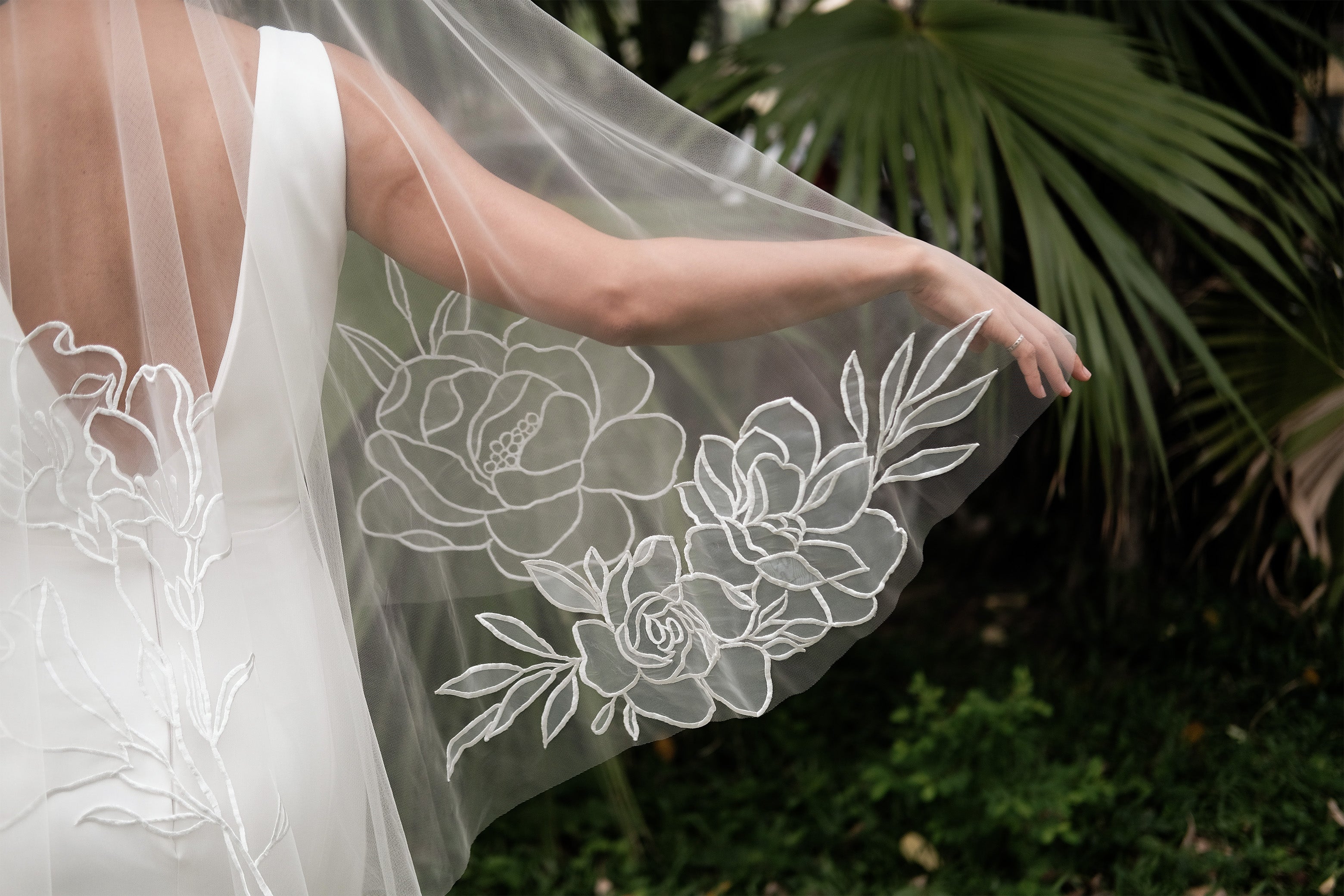
Every veil begins as a length of fabric and a sketch. We work primarily in English bridal tulle, fine silk-style tulle, and crisp Italian organza, choosing the base for the way it will fall on the bride rather than for what is cheapest to source. The fabric is cut on the bias when the design calls for a softer drape, gathered by hand at the comb or drop point, and finished at the edge in one of several ways: raw cut for a modern line, narrow rolled hem for a clean classic, scalloped lace for romance, or appliqued florals for a garden feel.
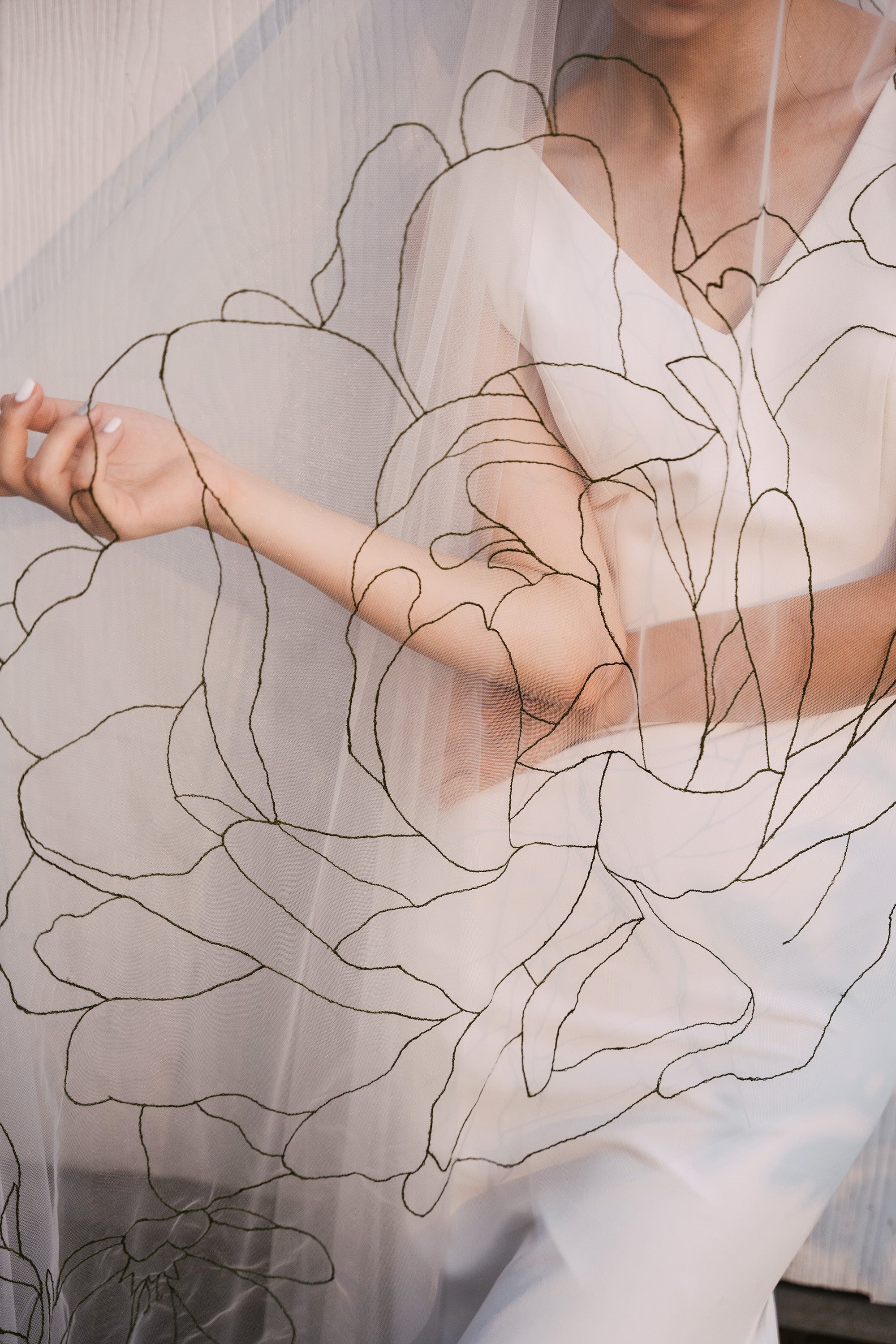
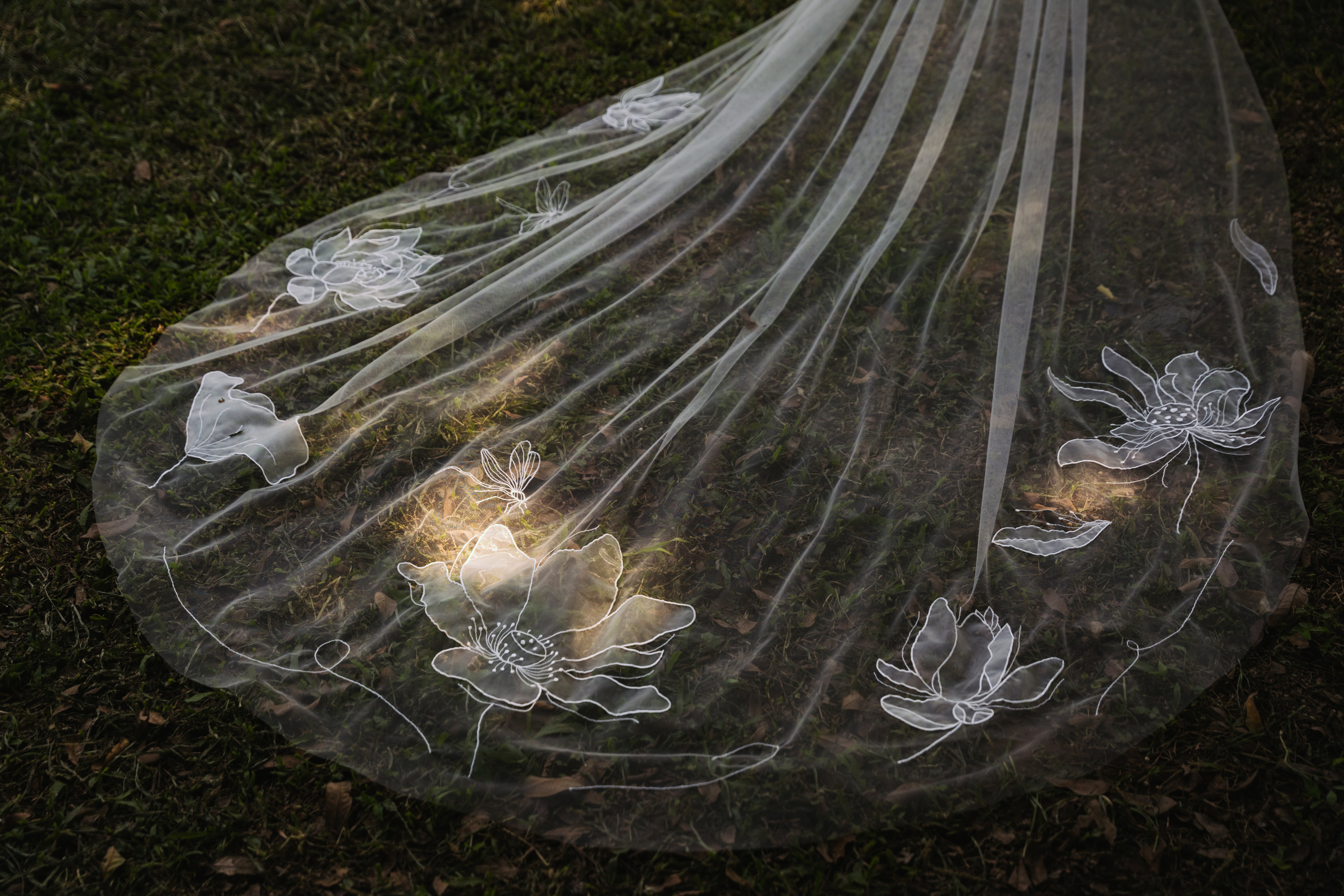
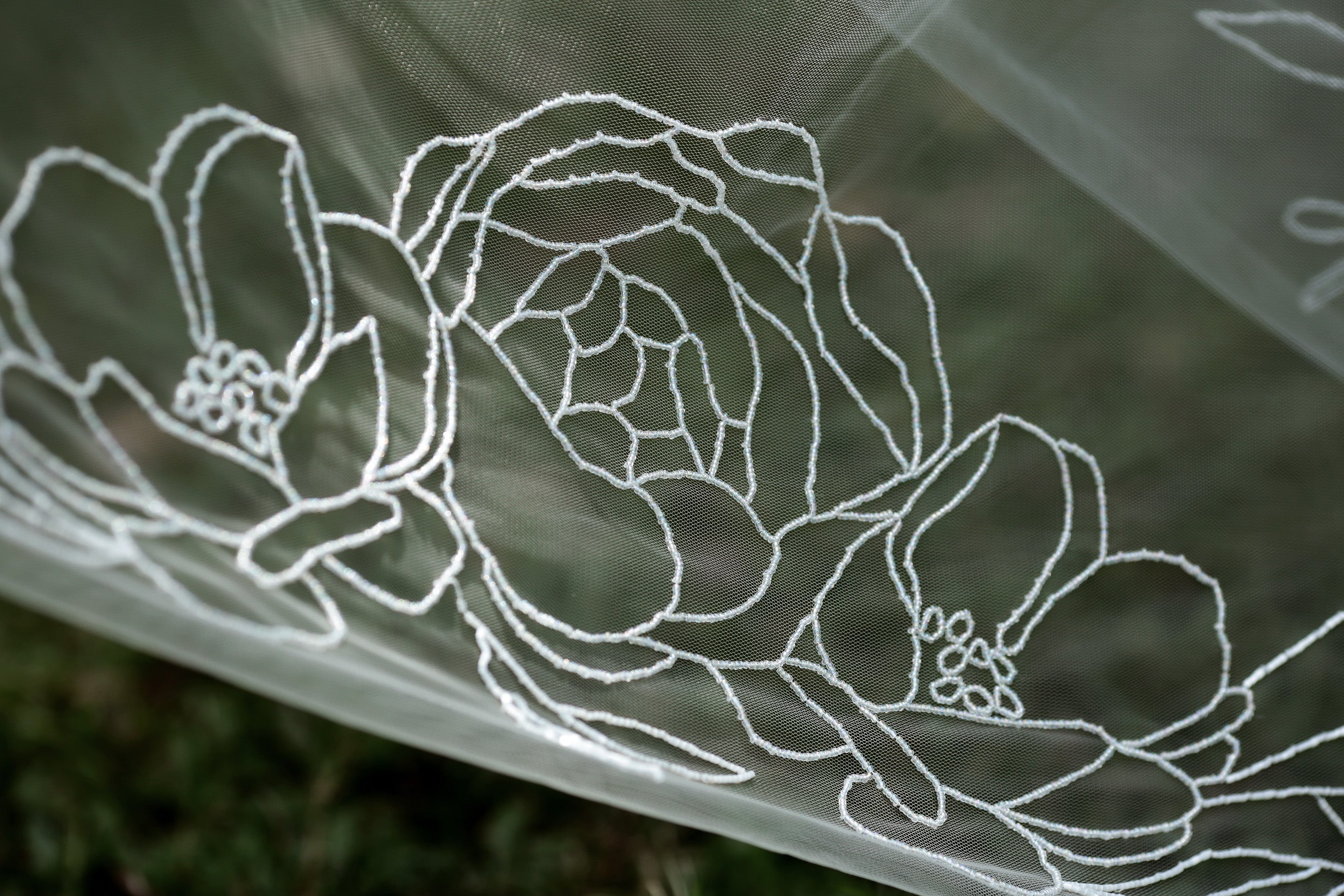
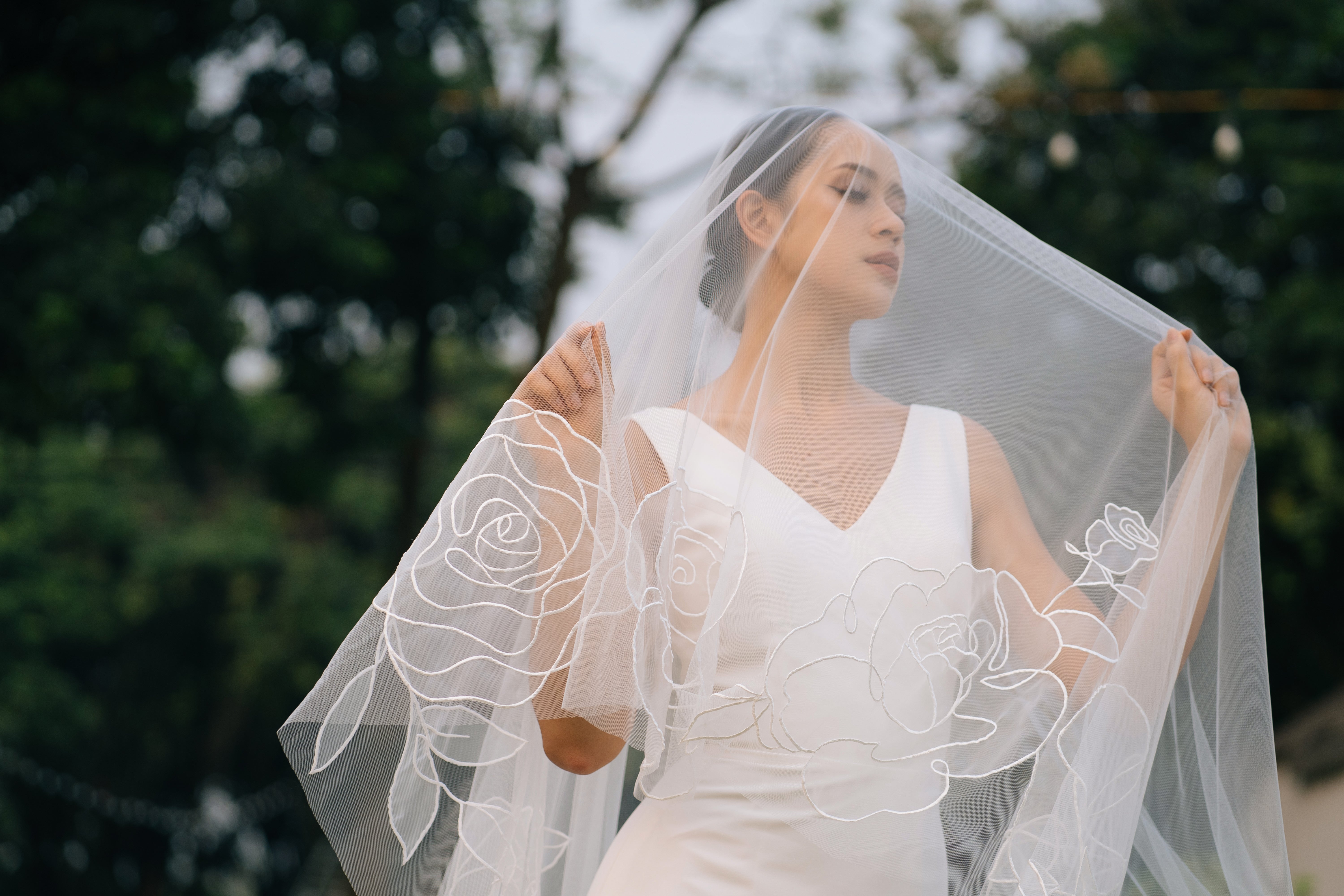
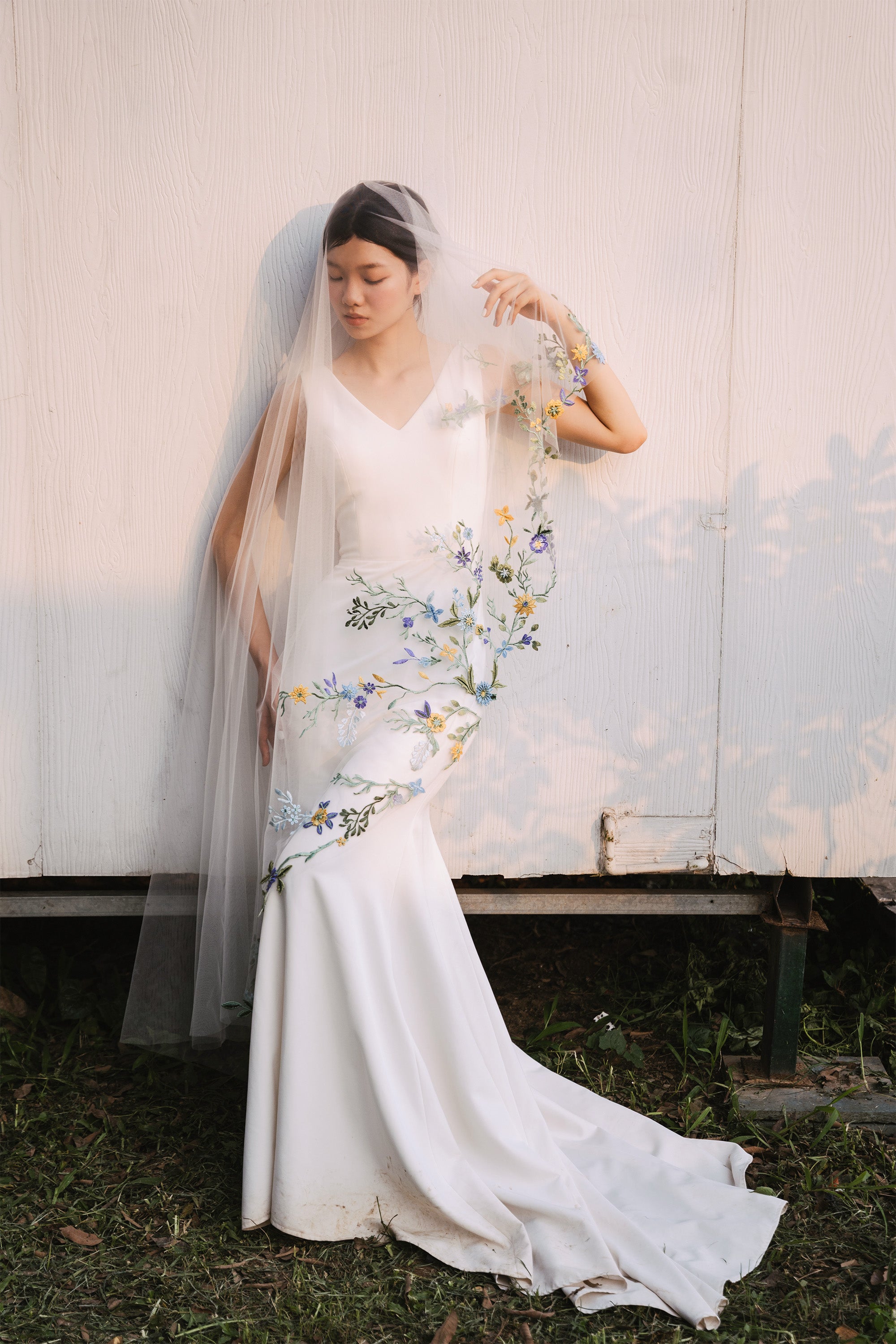
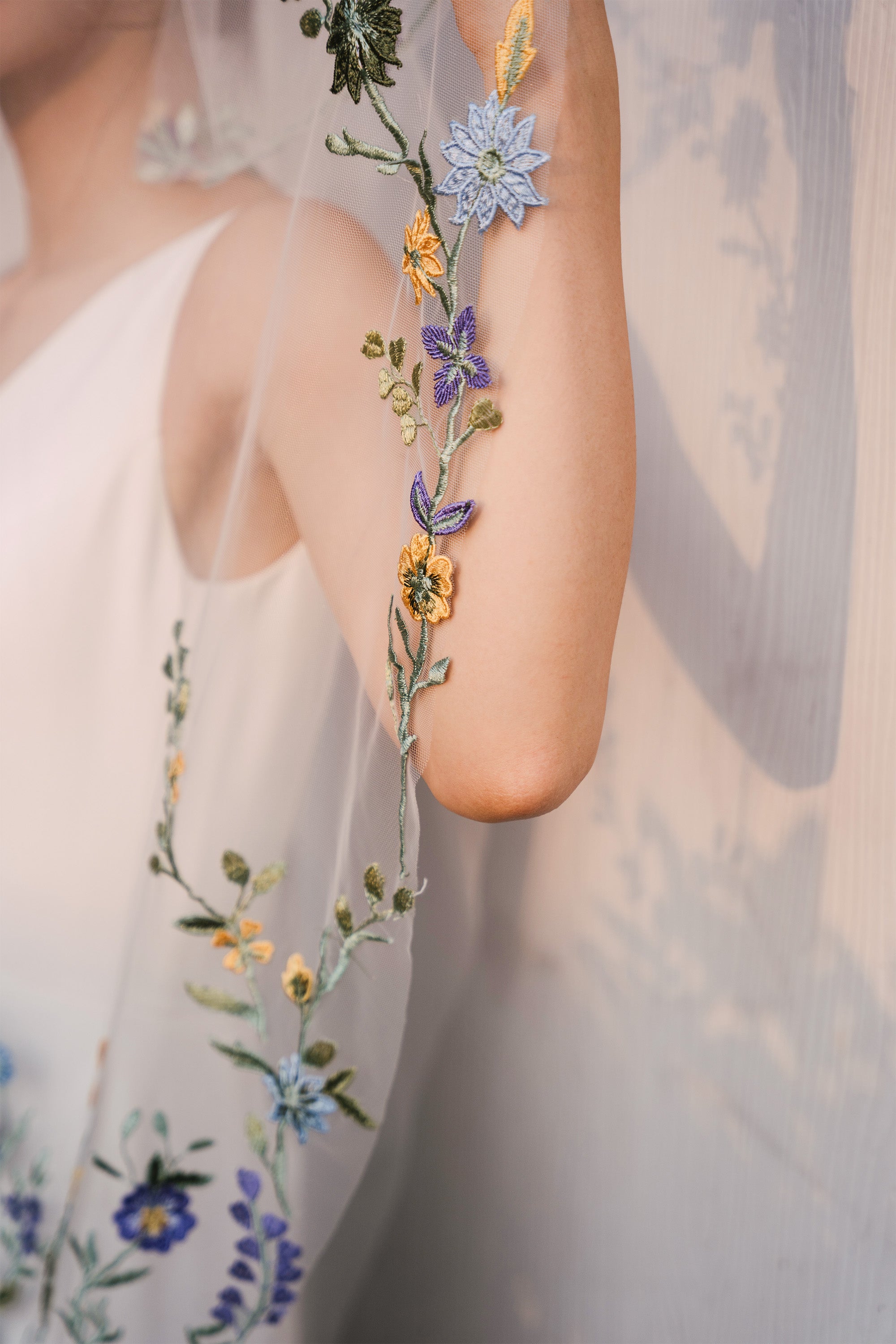
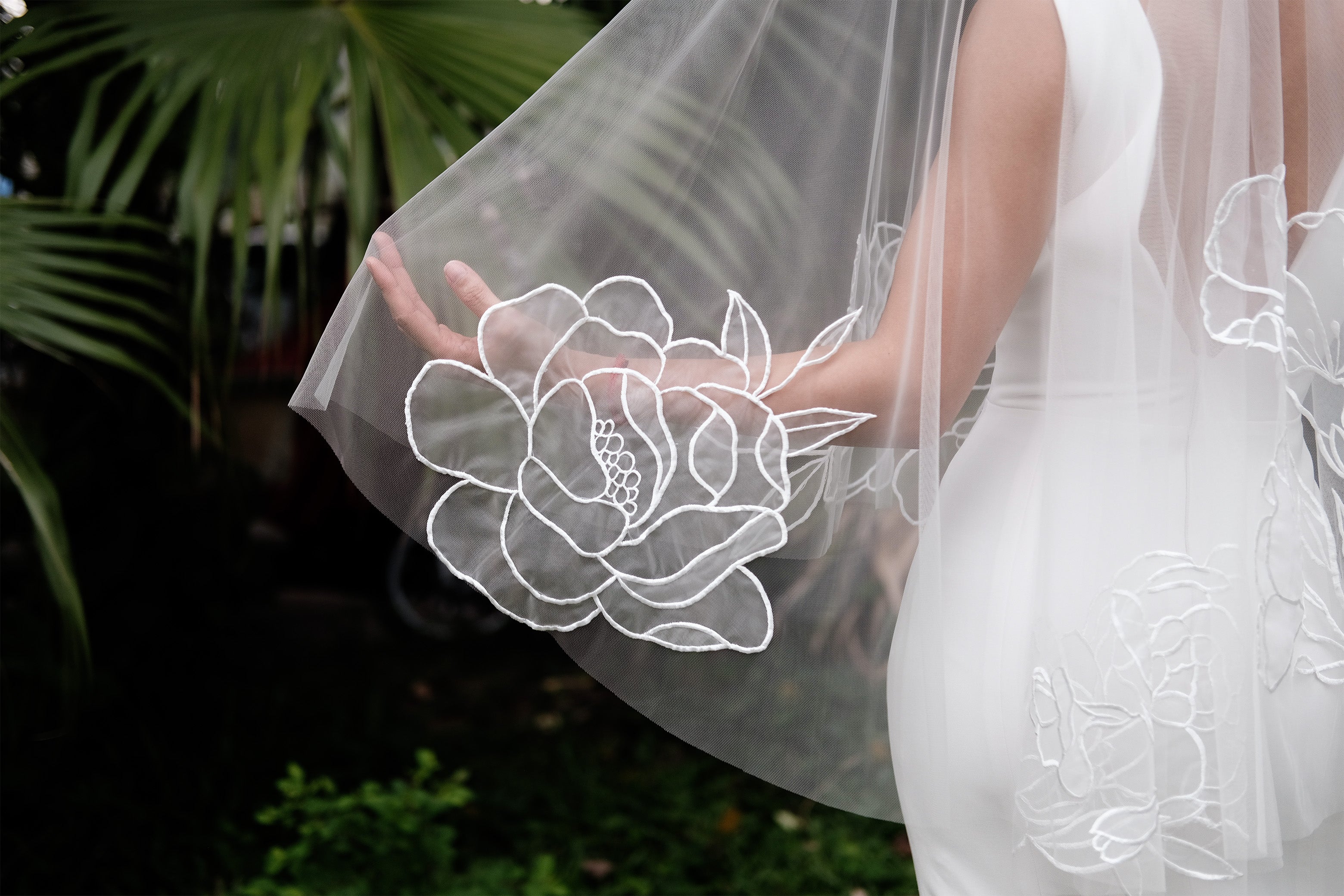
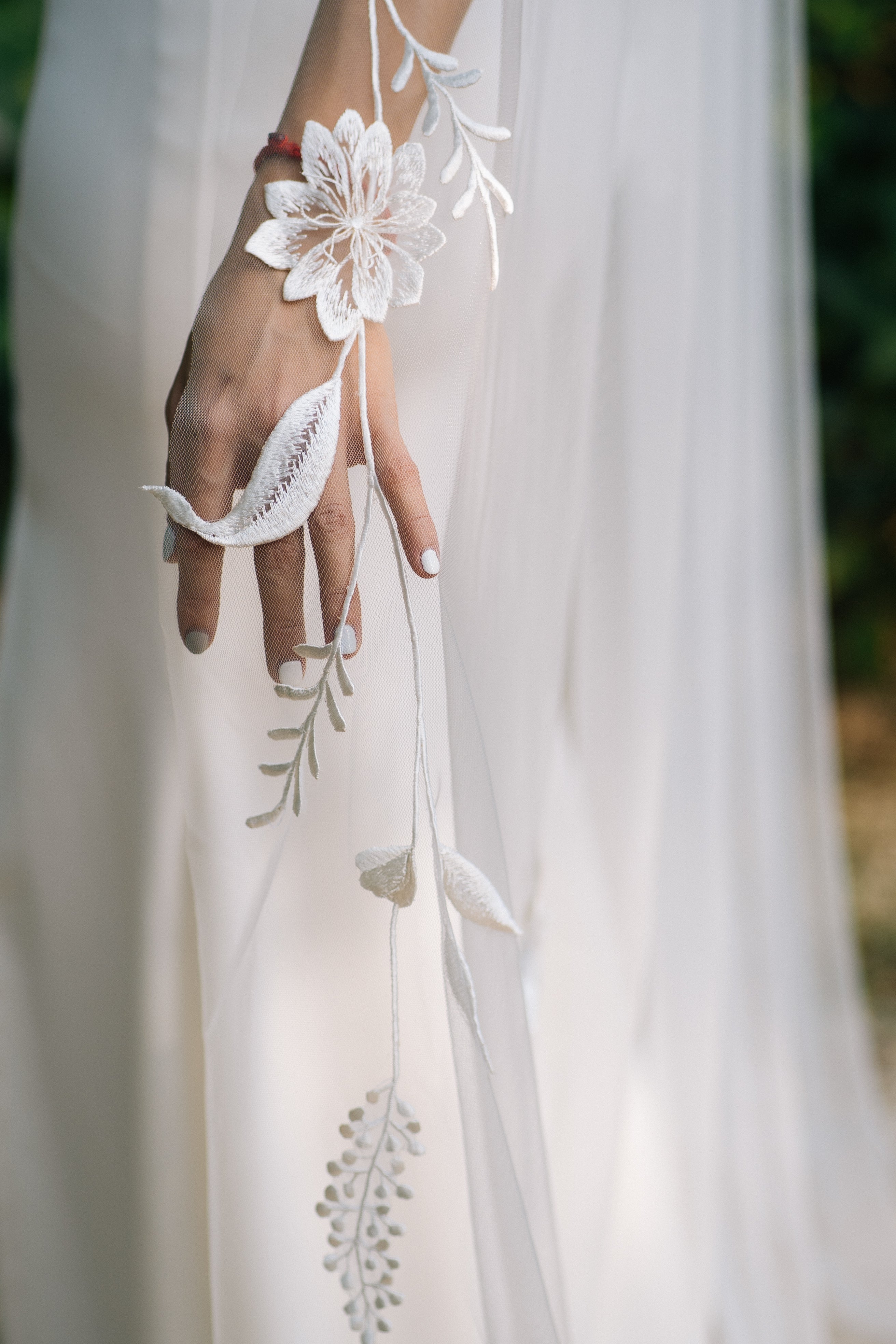
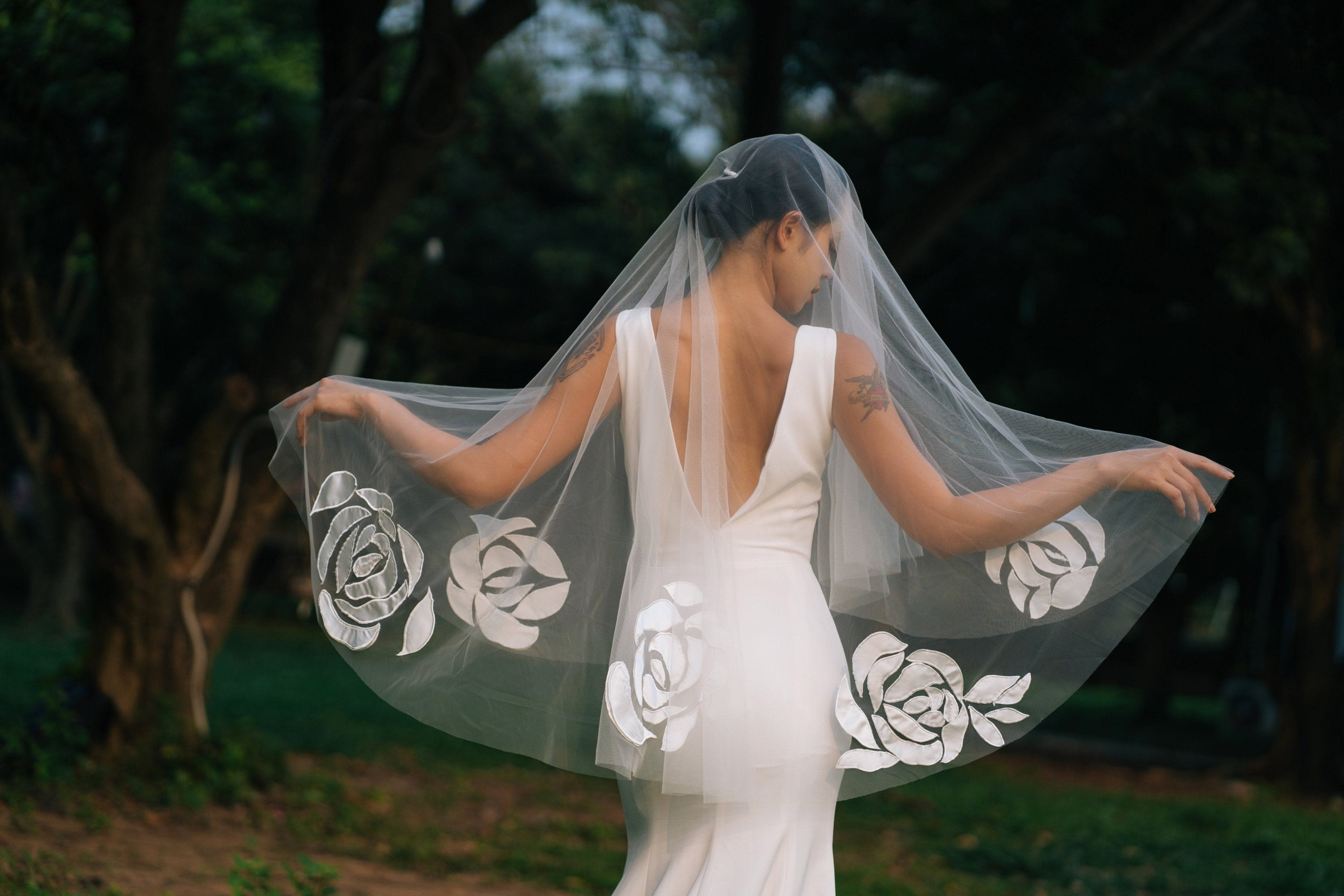
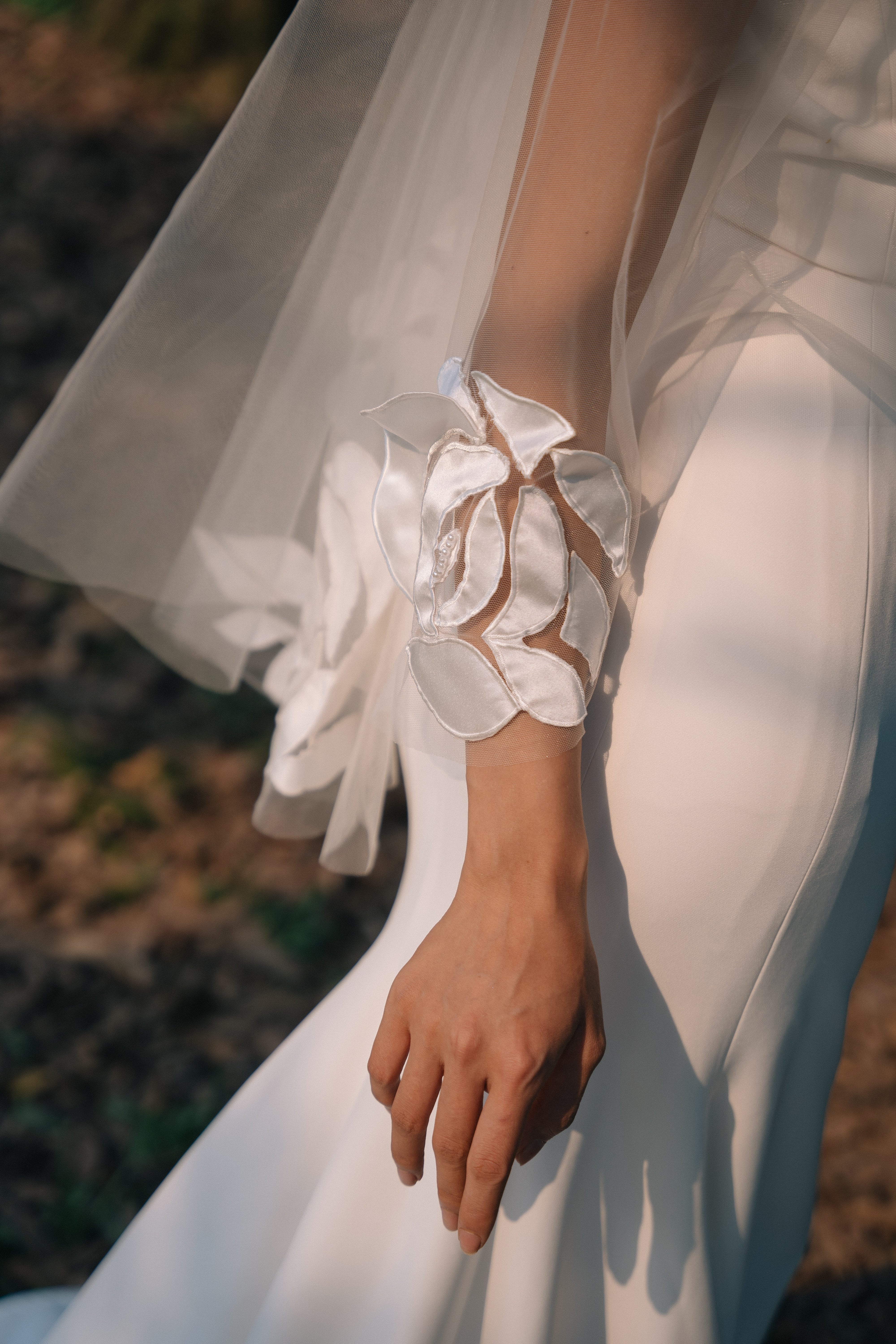
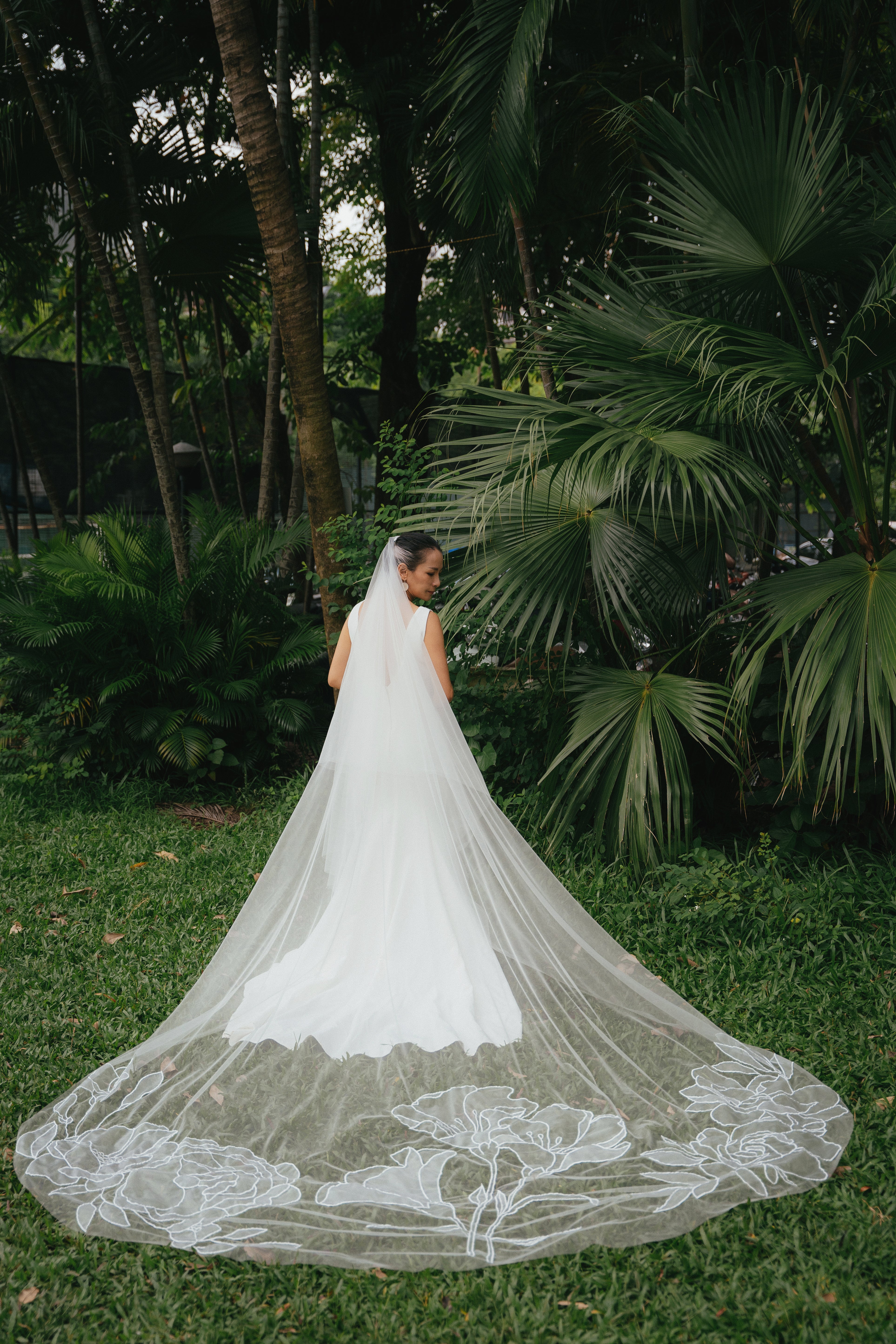
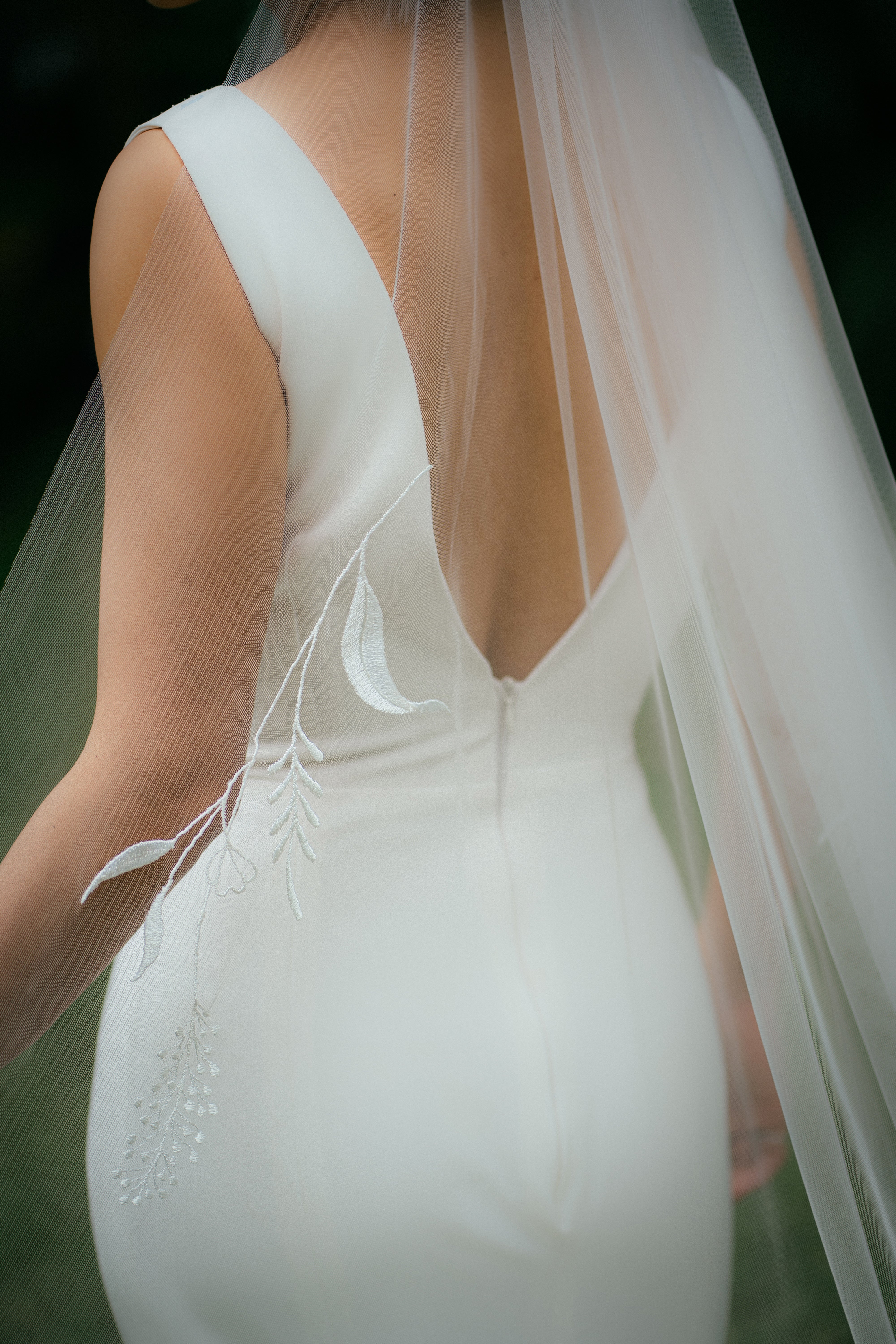
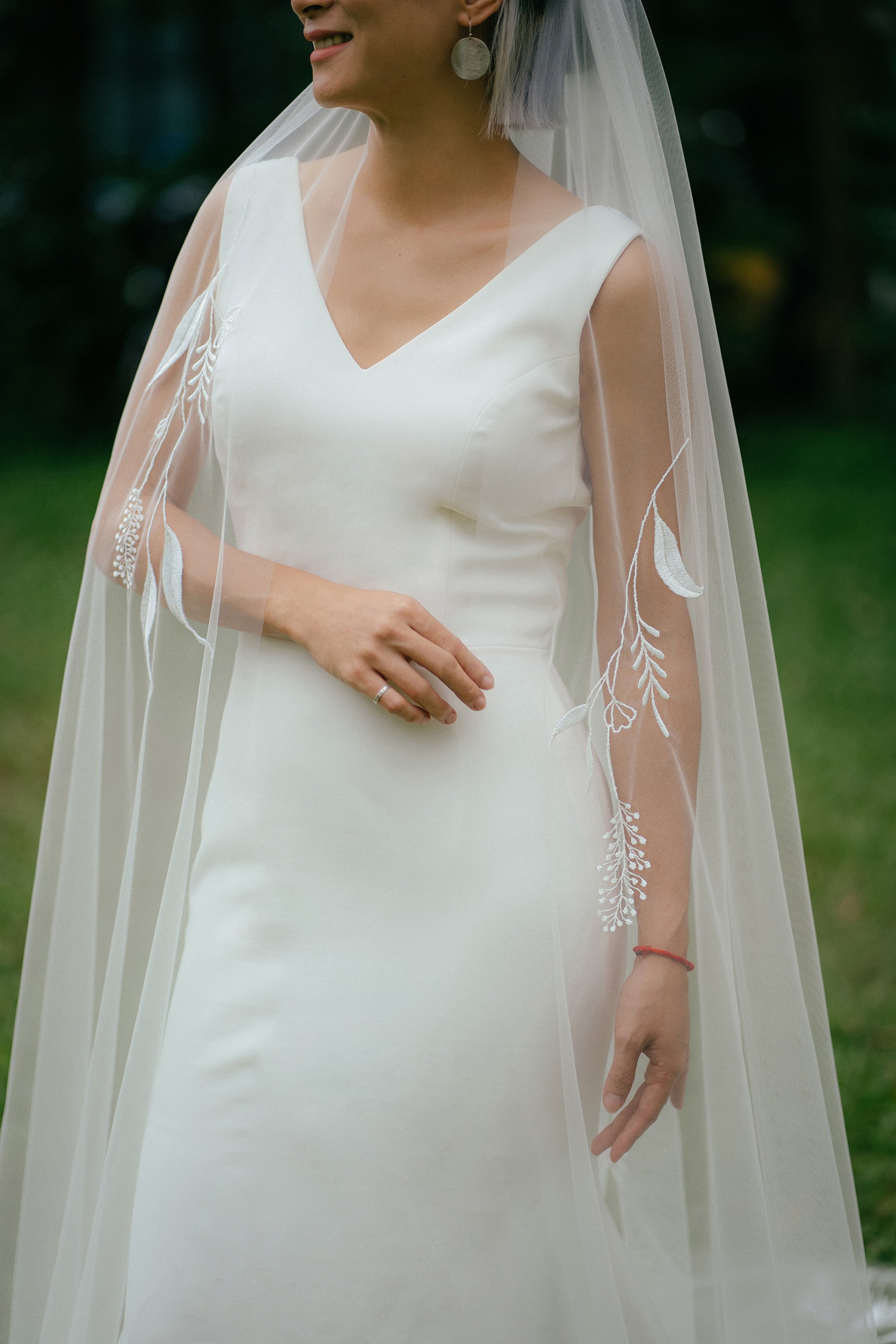
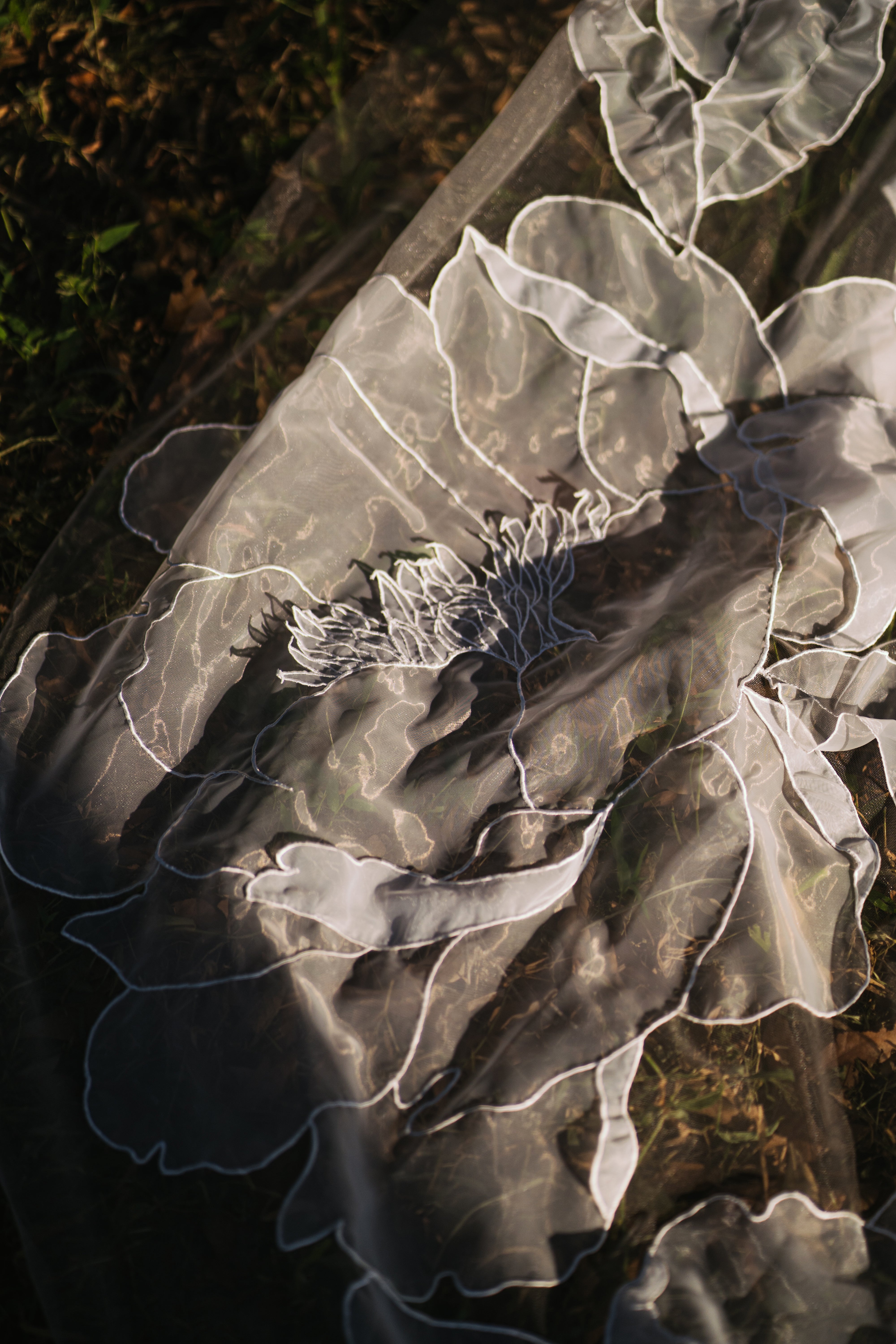
Hand work is where the hours go. A cathedral floral veil can take more than fifty hours of stitching, because every petal, leaf, and bead is placed one at a time on a frame. Our embroiderers train for years before they touch a bridal piece. To see this work up close, the Rosie floral drop veil and the Kaitie floral embroidered cathedral veil are good entry points, both photographed in natural light so the texture reads honestly.
Choosing your wedding veil by length
Length is the first decision and the one that most changes the photograph. We group our wedding veils into three working lengths.
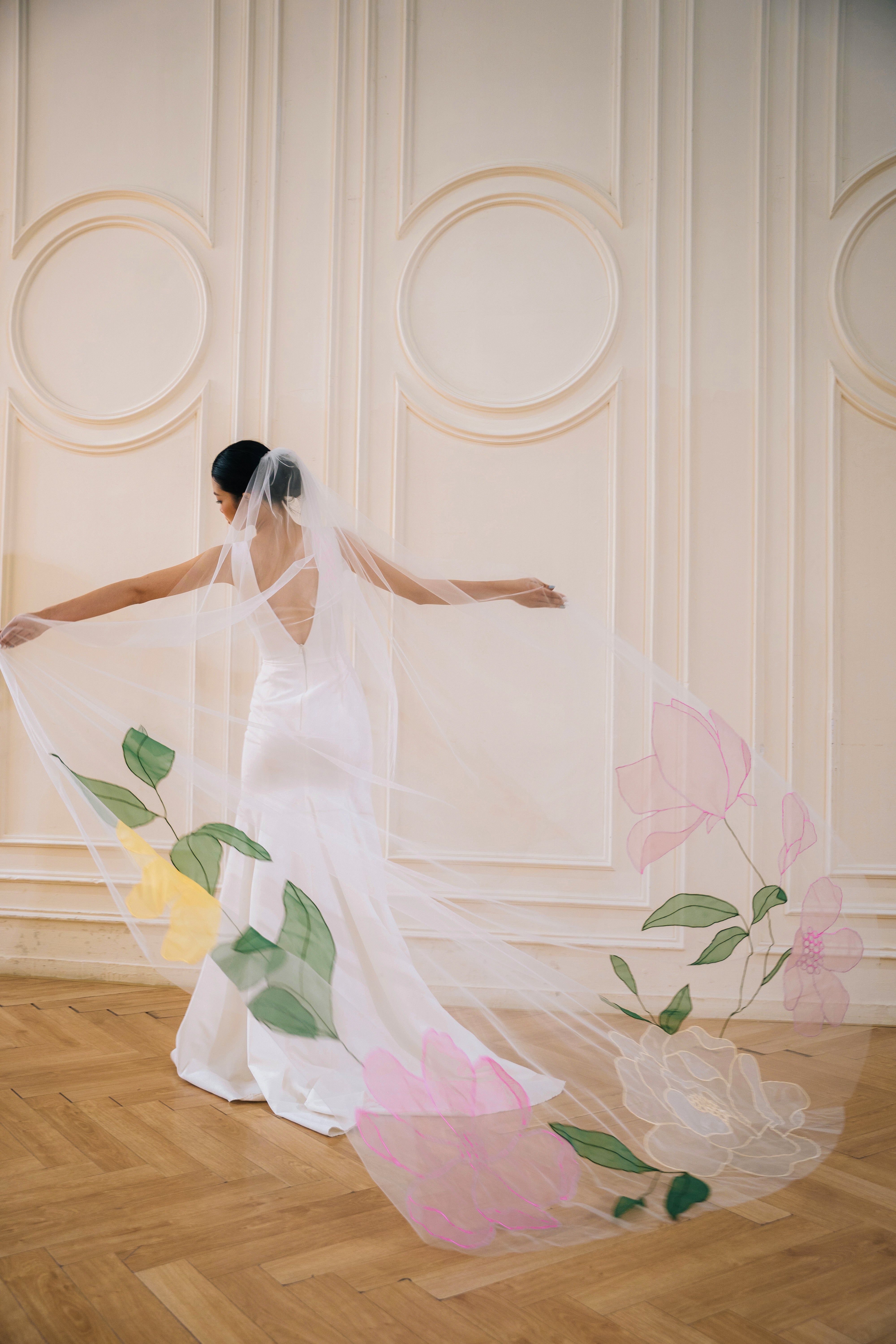
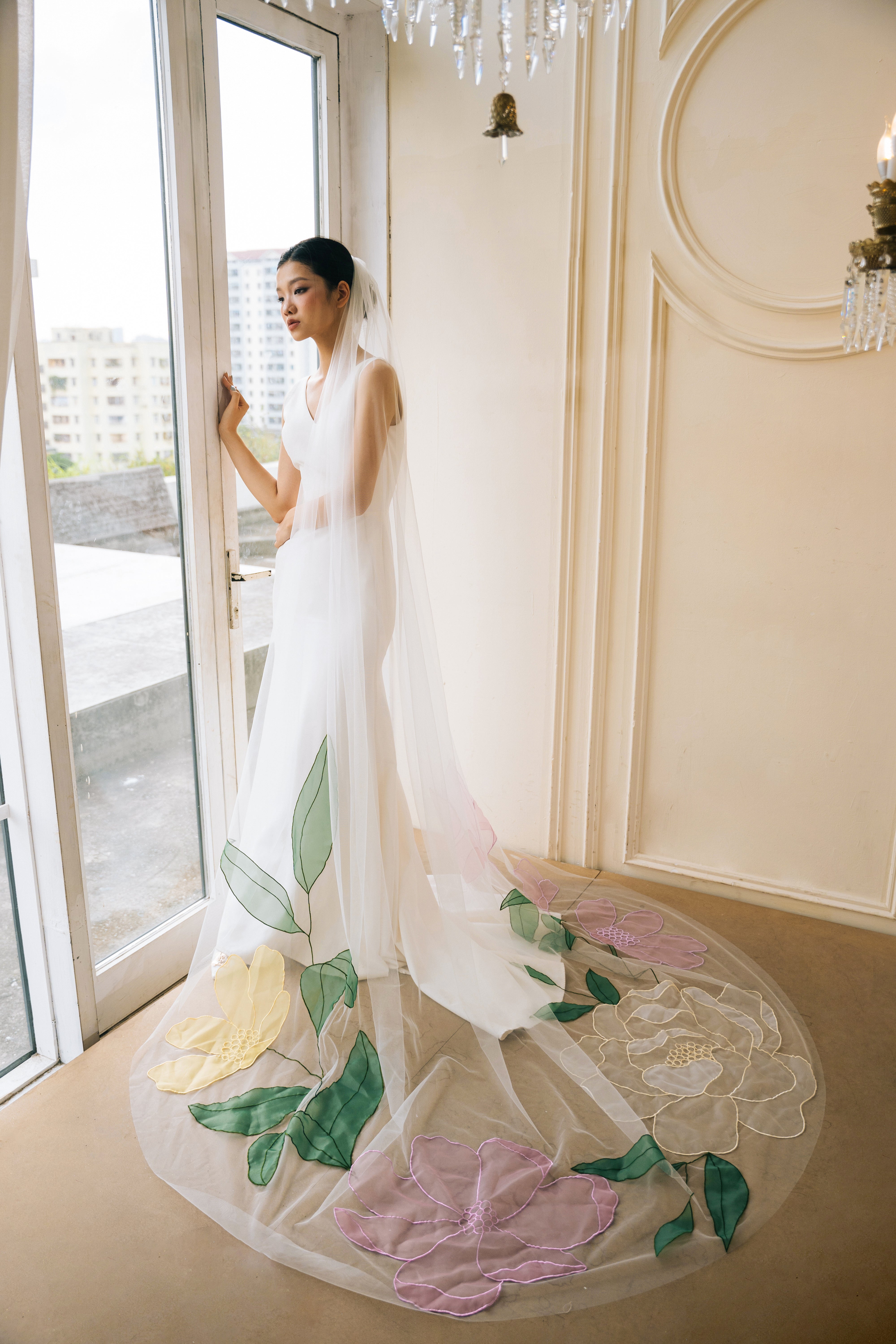
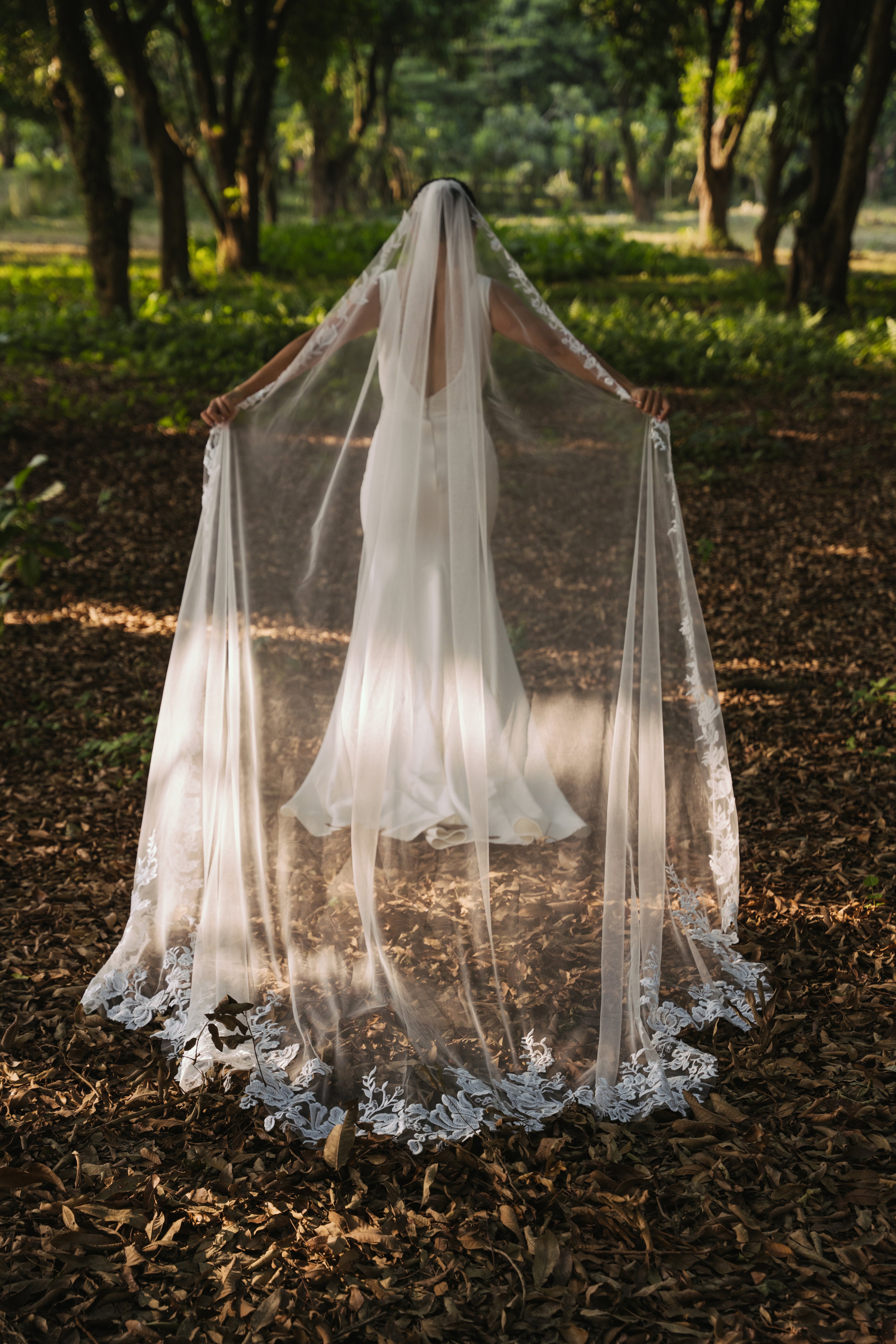
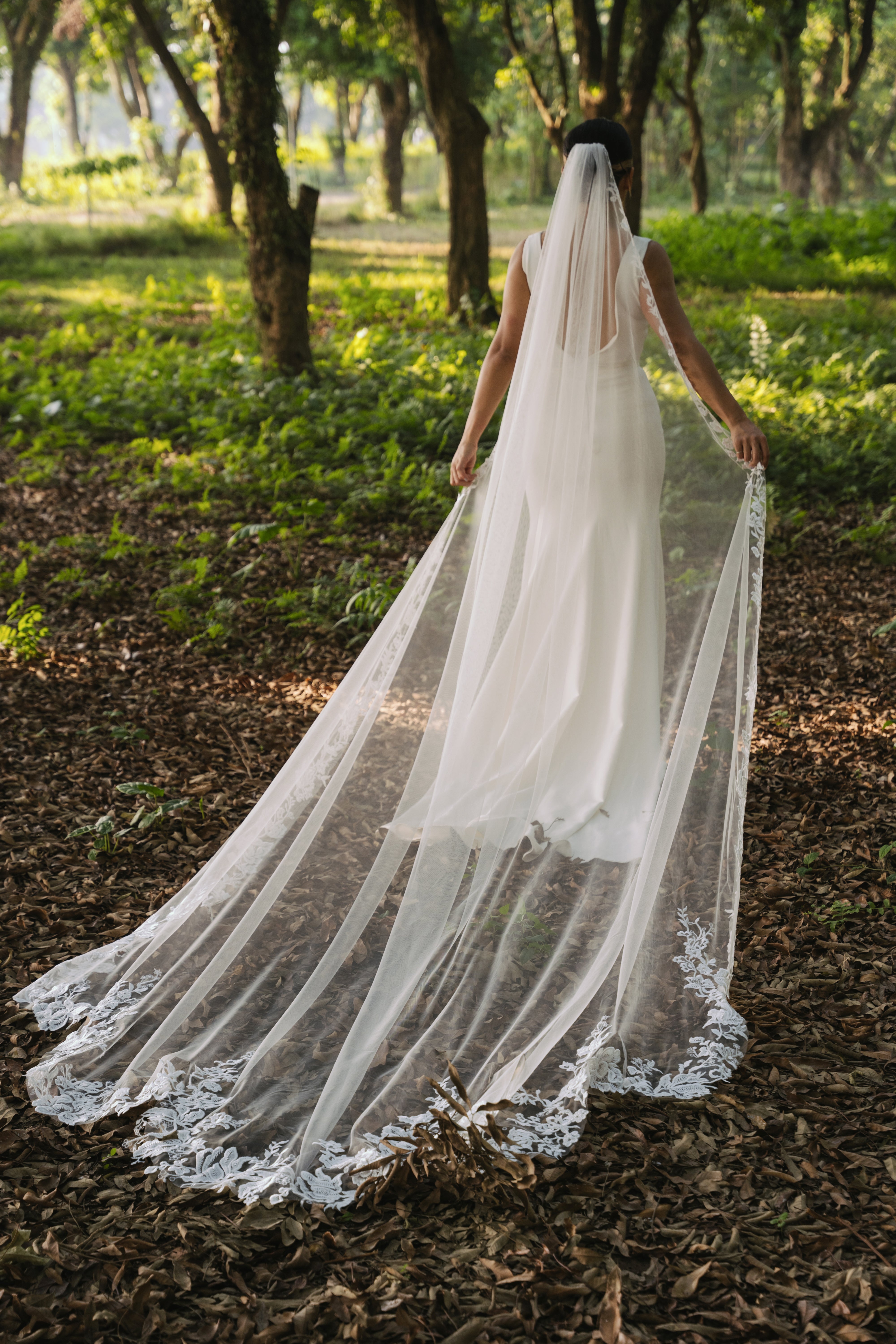
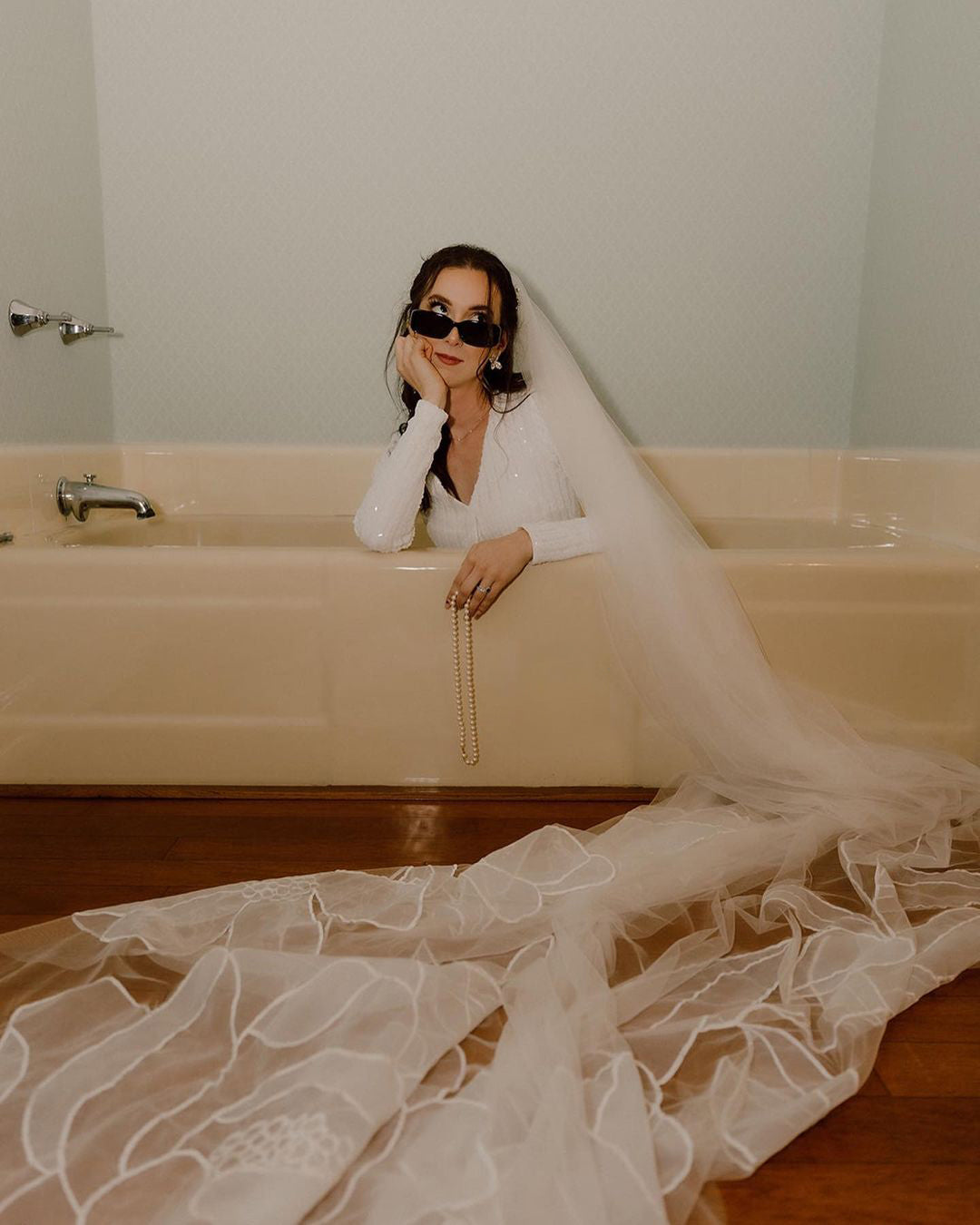
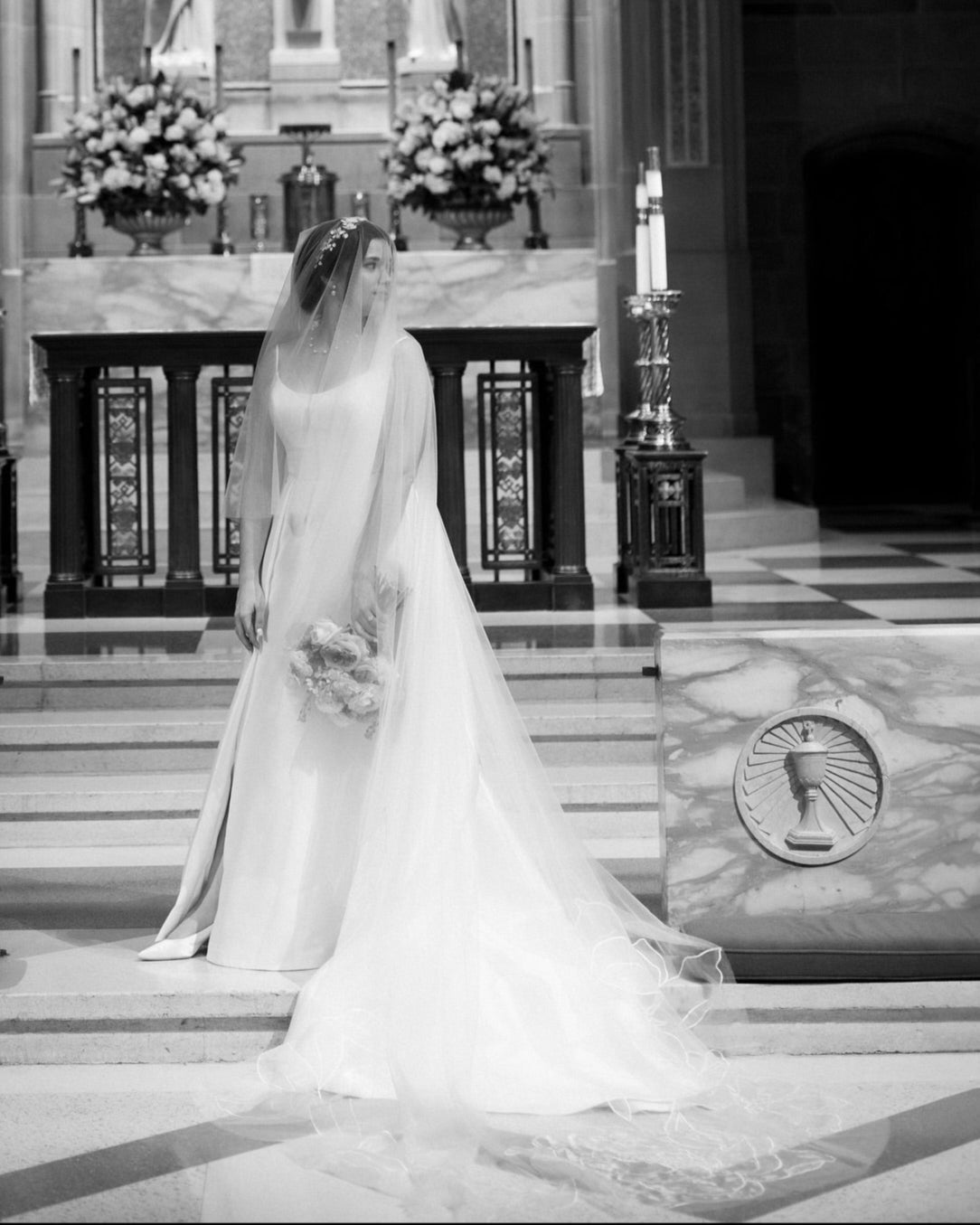
A cathedral veil falls roughly 108 to 120 inches from the comb, trailing well past the gown. It carries the most visual weight and is the right choice for a long aisle, a grand church, or any ceremony where you want the veil to read as part of the architecture. Brides in fit-and-flare or A-line gowns often pair them with a matching cathedral train. See the full cathedral wedding veil collection for hand-made options from 108 to 120 inches.
A chapel length veil sits at around 90 inches, just past the floor. It is the most photographed length in our catalogue because it gives a romantic sweep behind the bride without the management required of a cathedral. Chapel works in almost any venue and pairs with almost any gown silhouette. The chapel length veils collection shows silk tulle, lace, embroidery, and beaded designs side by side.
A fingertip veil ends at the bride's fingertips, around 36 to 40 inches. It is the easiest length to wear all day, sits cleanly over a low back, and dances well at the reception. If your venue is intimate, your gown is short, or you simply want a veil you can forget about by the time the toasts start, browse the fingertip length veils collection. For brides choosing between lengths, the chart in our veil length guide shows each length on the same model so you can compare proportions honestly.
Choosing your wedding veil by style
Once you have a length in mind, the next decision is surface: the fabric, the trim, and the embellishment. Tara Bridal organises this by three main style families.
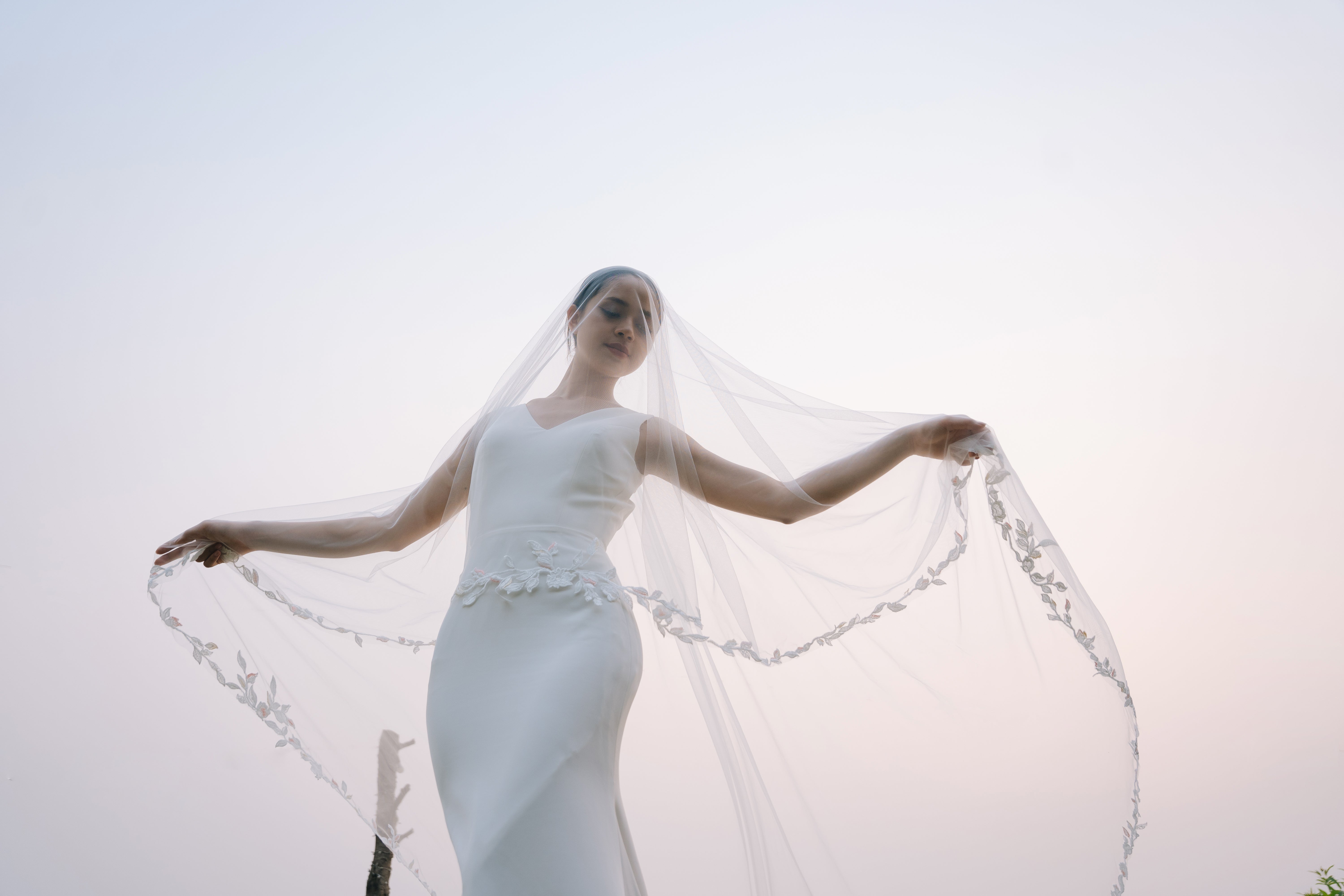
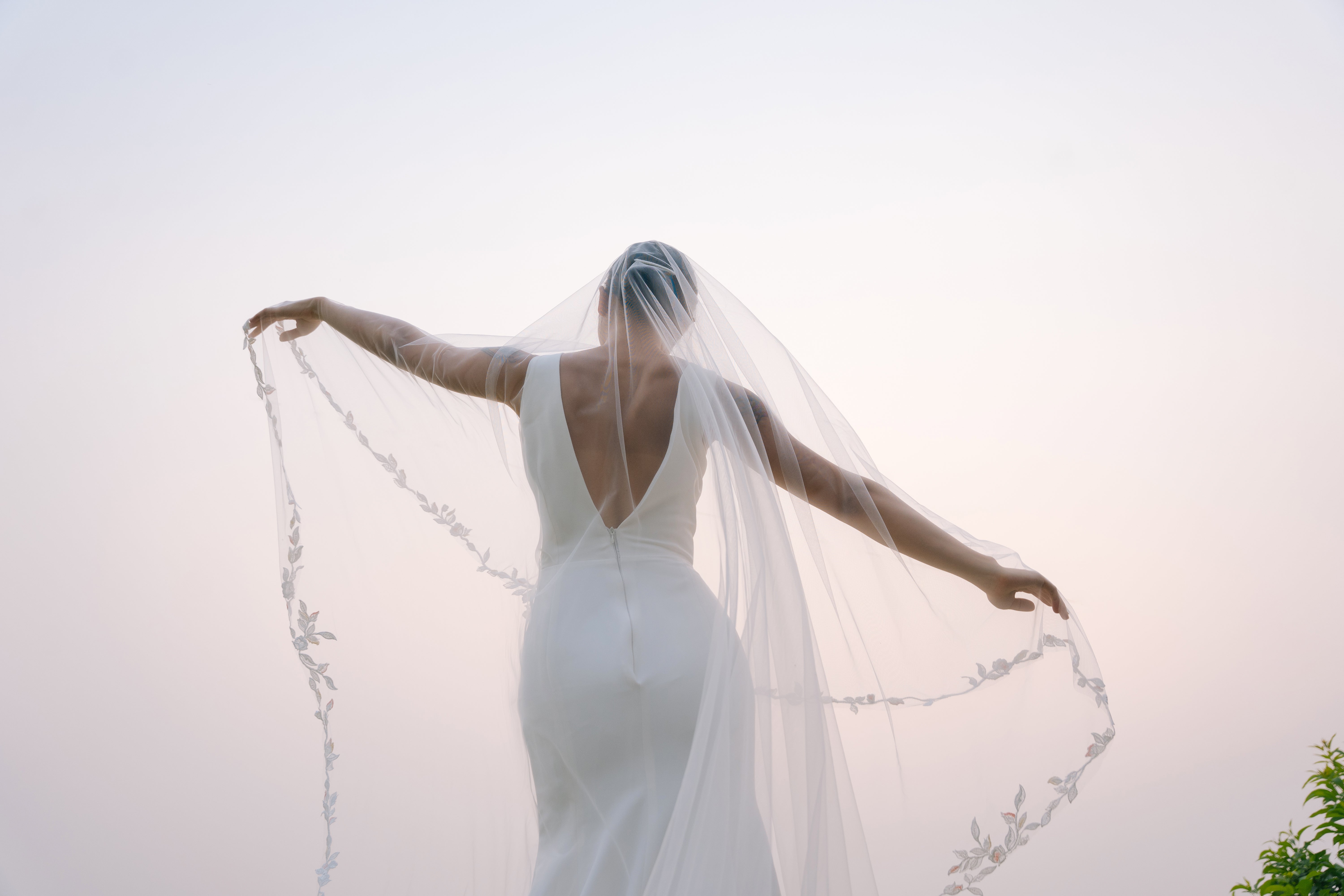
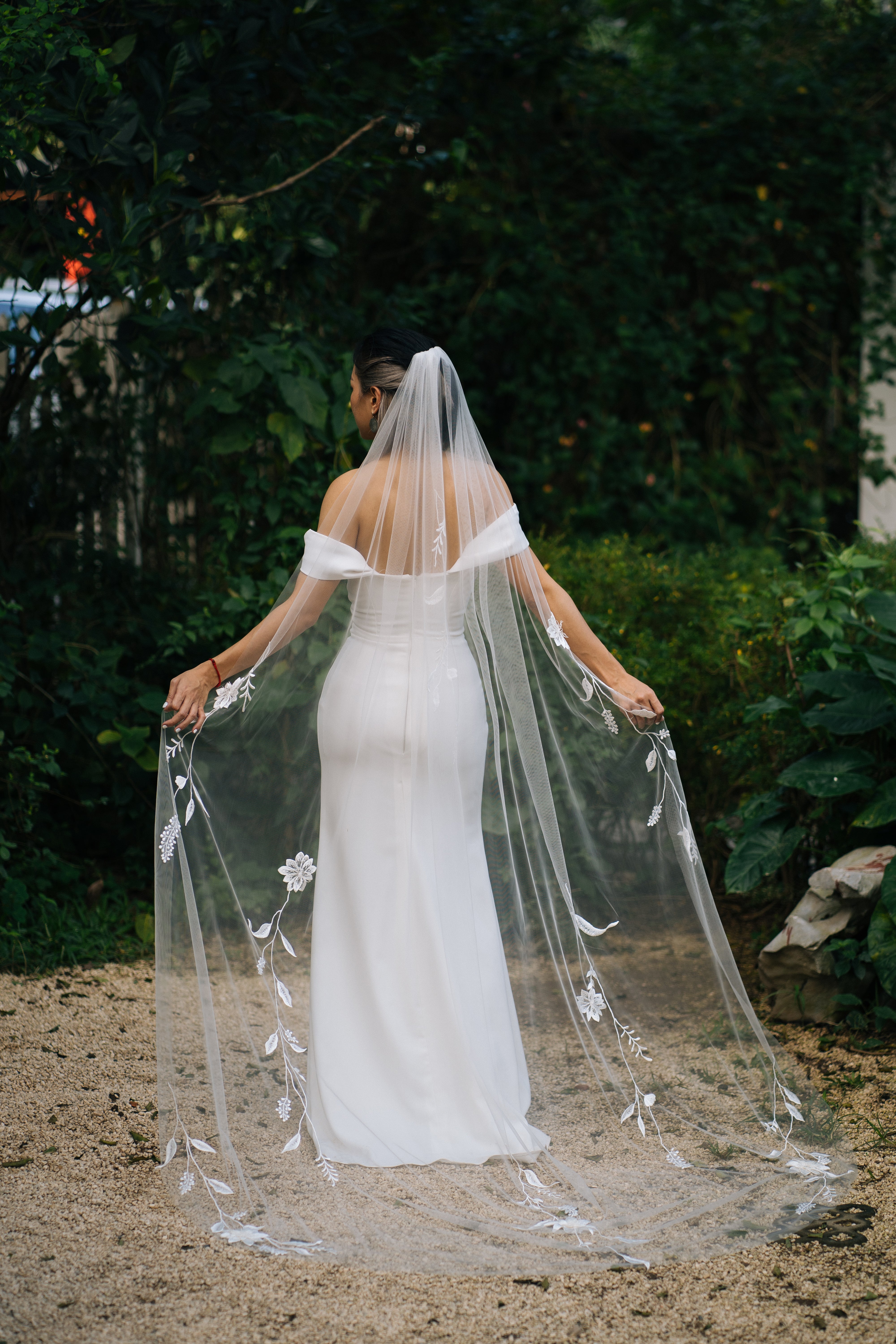
A lace wedding veil uses a finished lace border, usually Chantilly or a custom-corded lace, applied to a tulle base. The lace reads as a fine, drawn line in photographs and gives a veil the heirloom quality brides ask for when they want their daughter to wear it one day. Browse the lace wedding veils collection for chapel, cathedral, and fingertip options. The Ela lace wedding veil is a good representative of the house style.
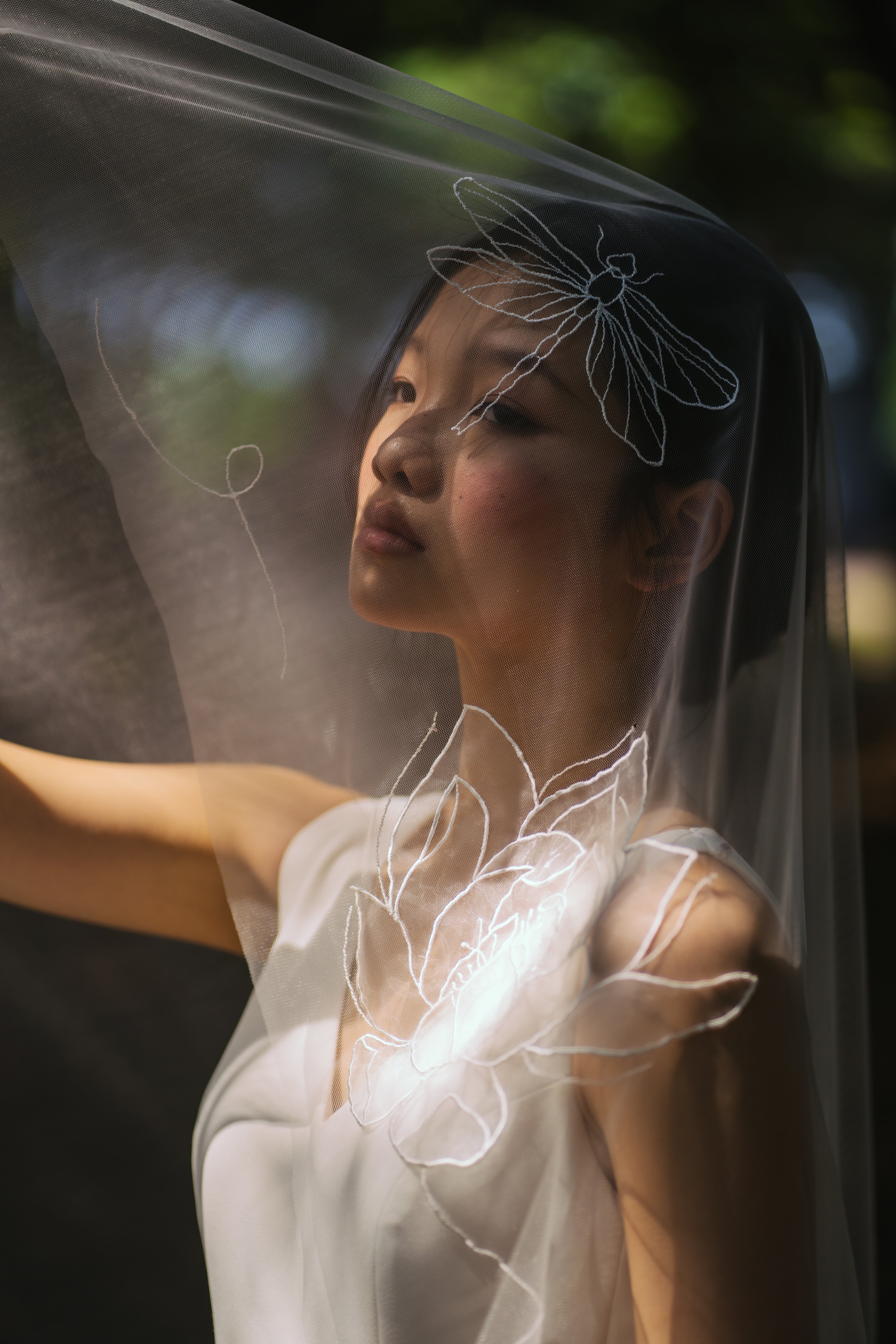
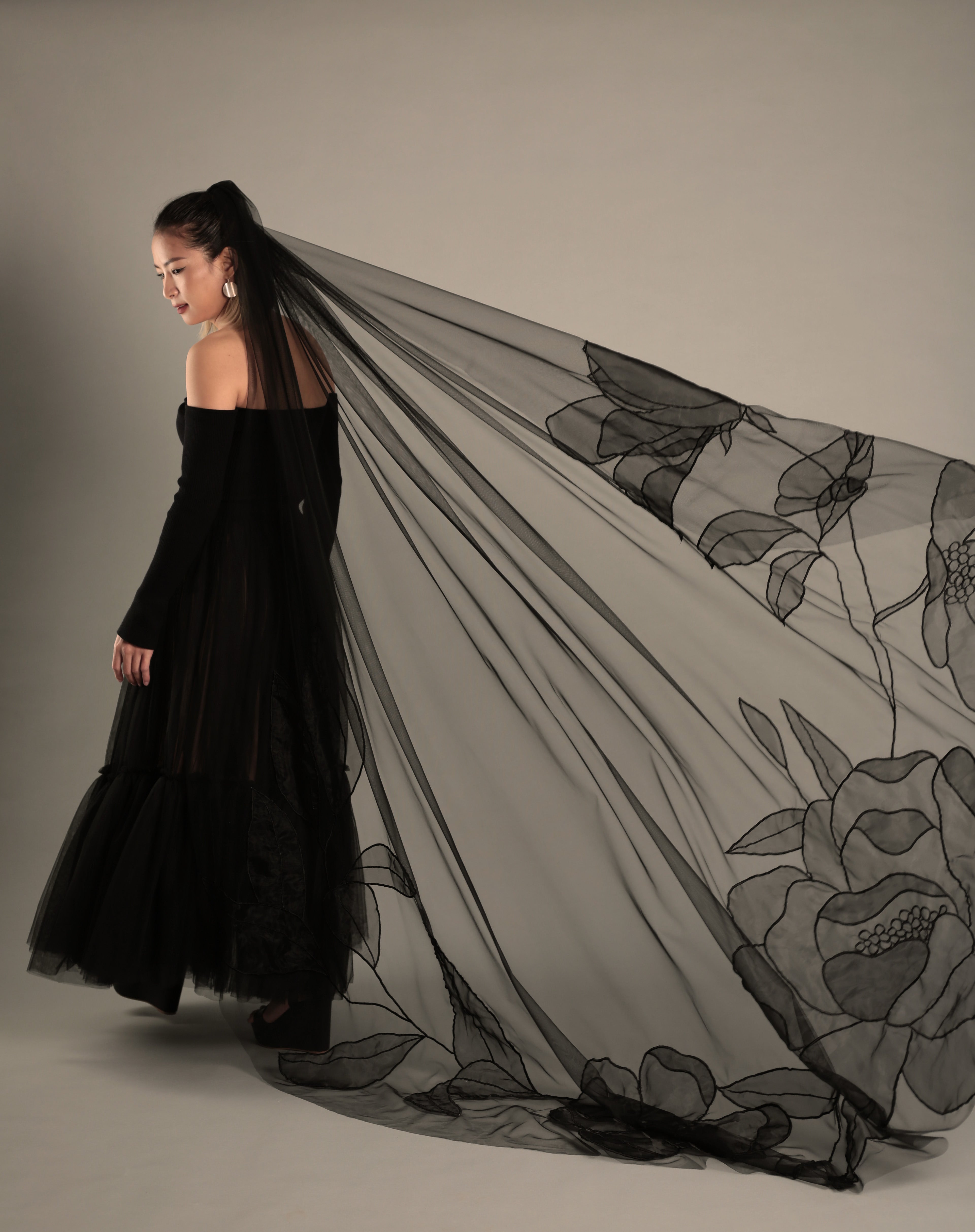
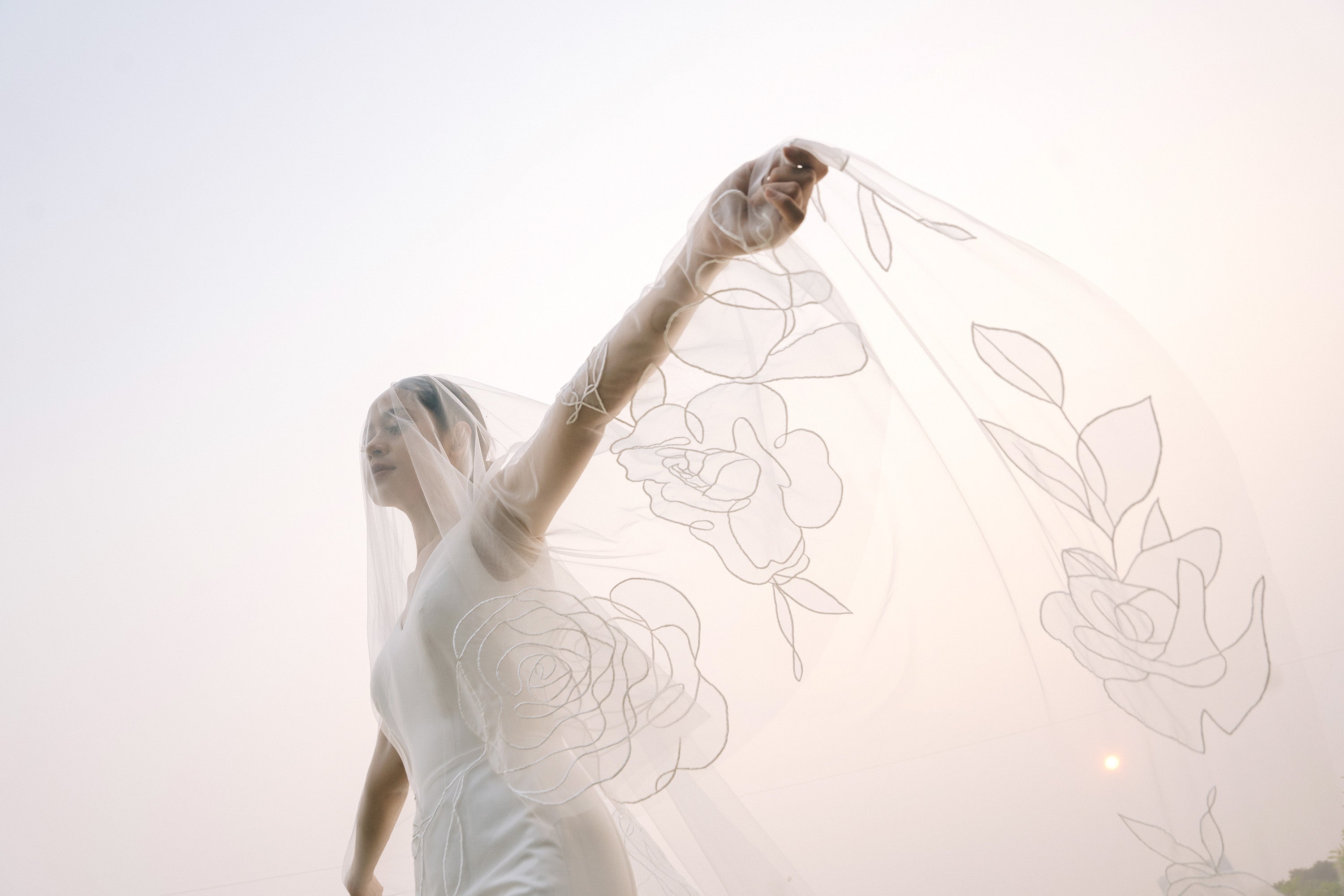
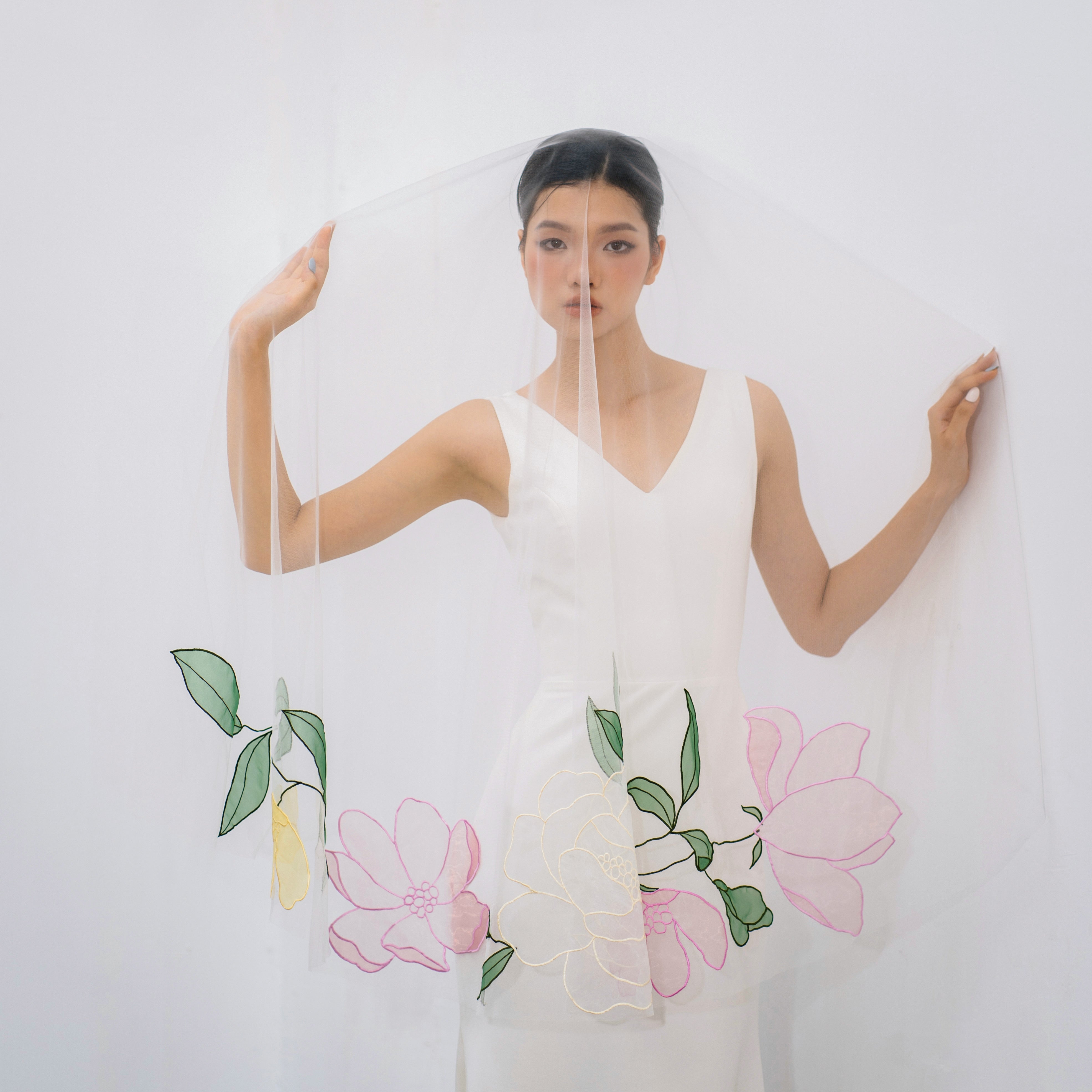
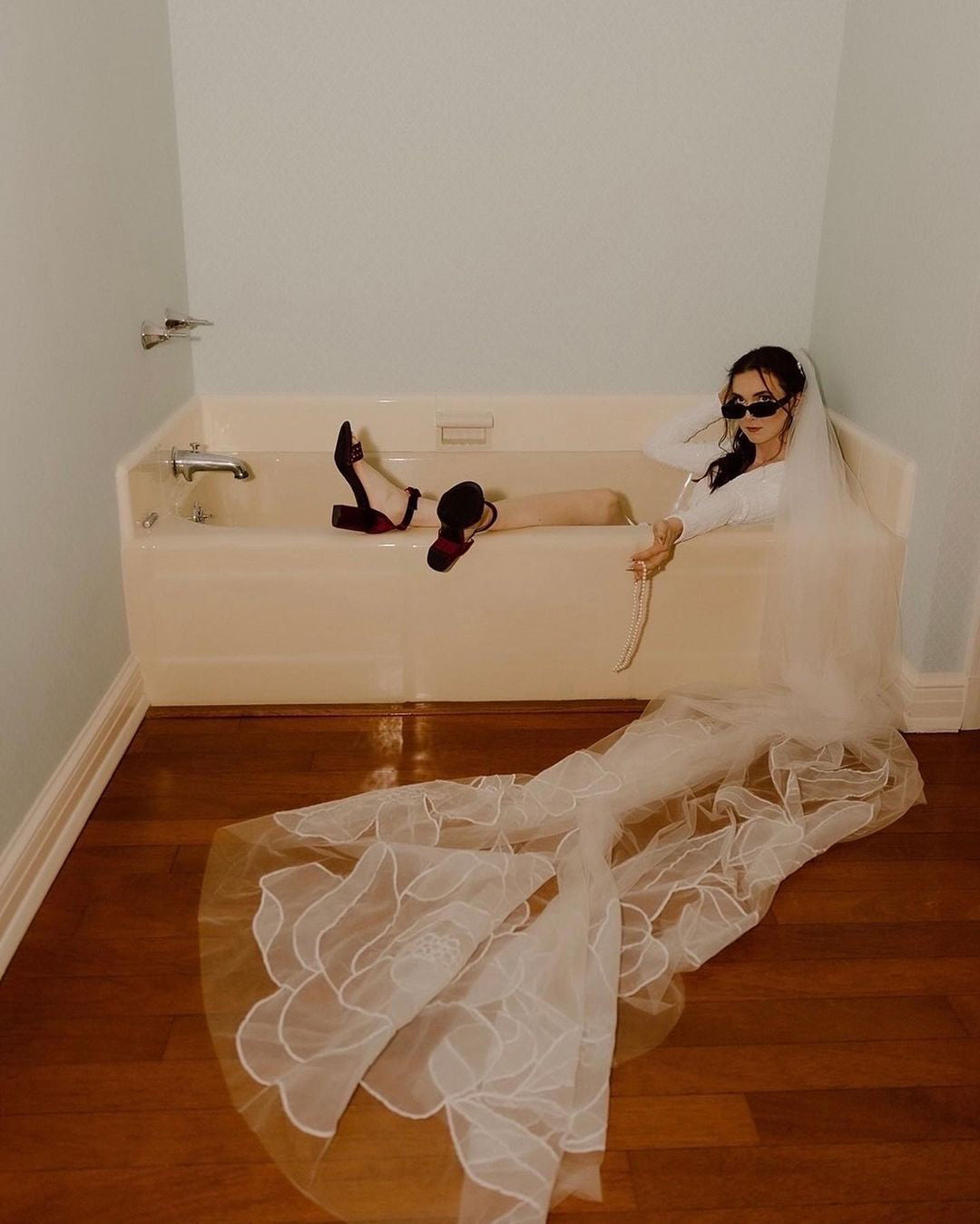
A floral wedding veil features blooms either embroidered into the tulle or built up as three-dimensional petals applied by hand. These are our most photographed designs on social, partly because the florals catch the light the way a static lace cannot. See the floral veils collection for the full range, from soft scattered embroidery to dense, sculptural appliqué.
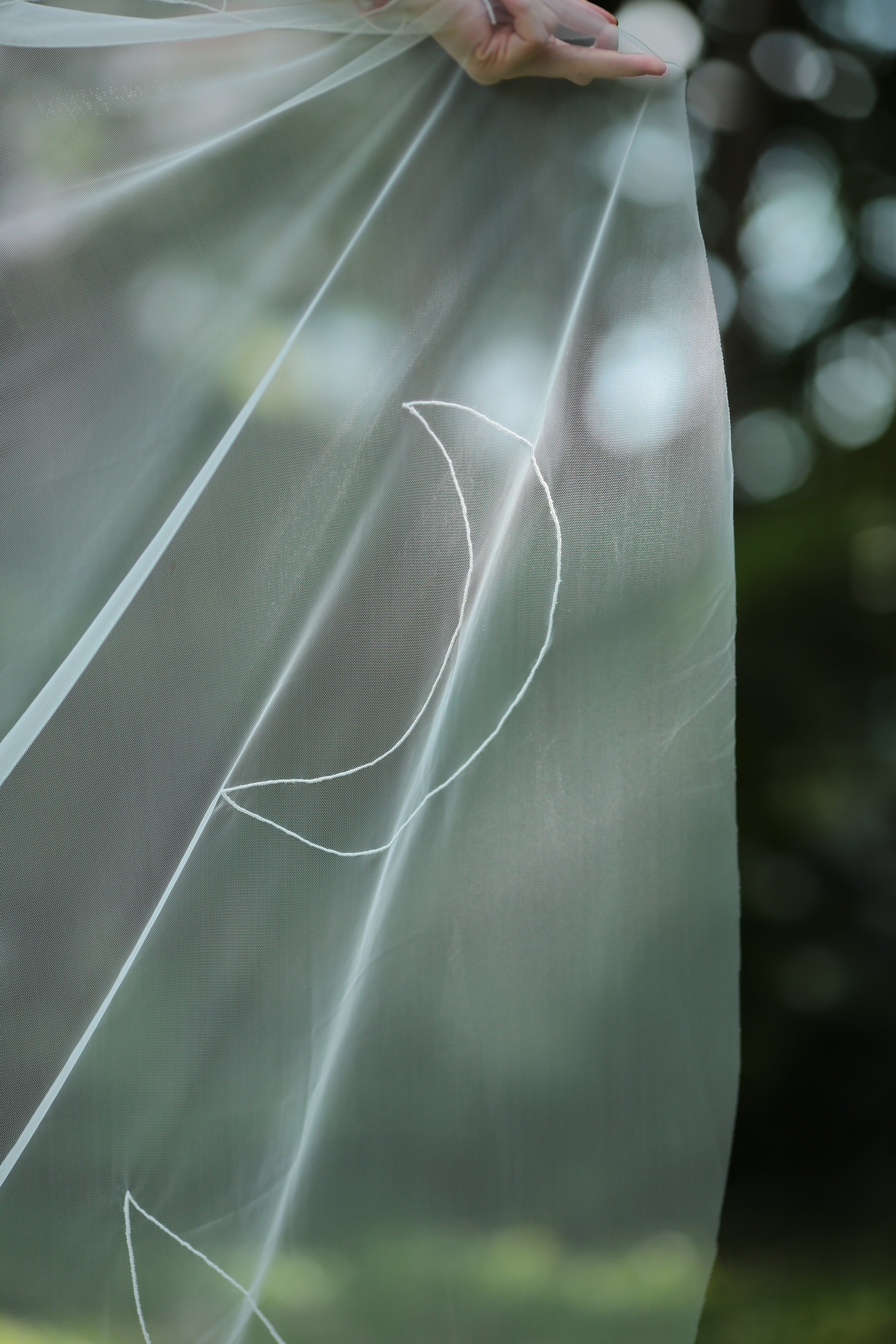
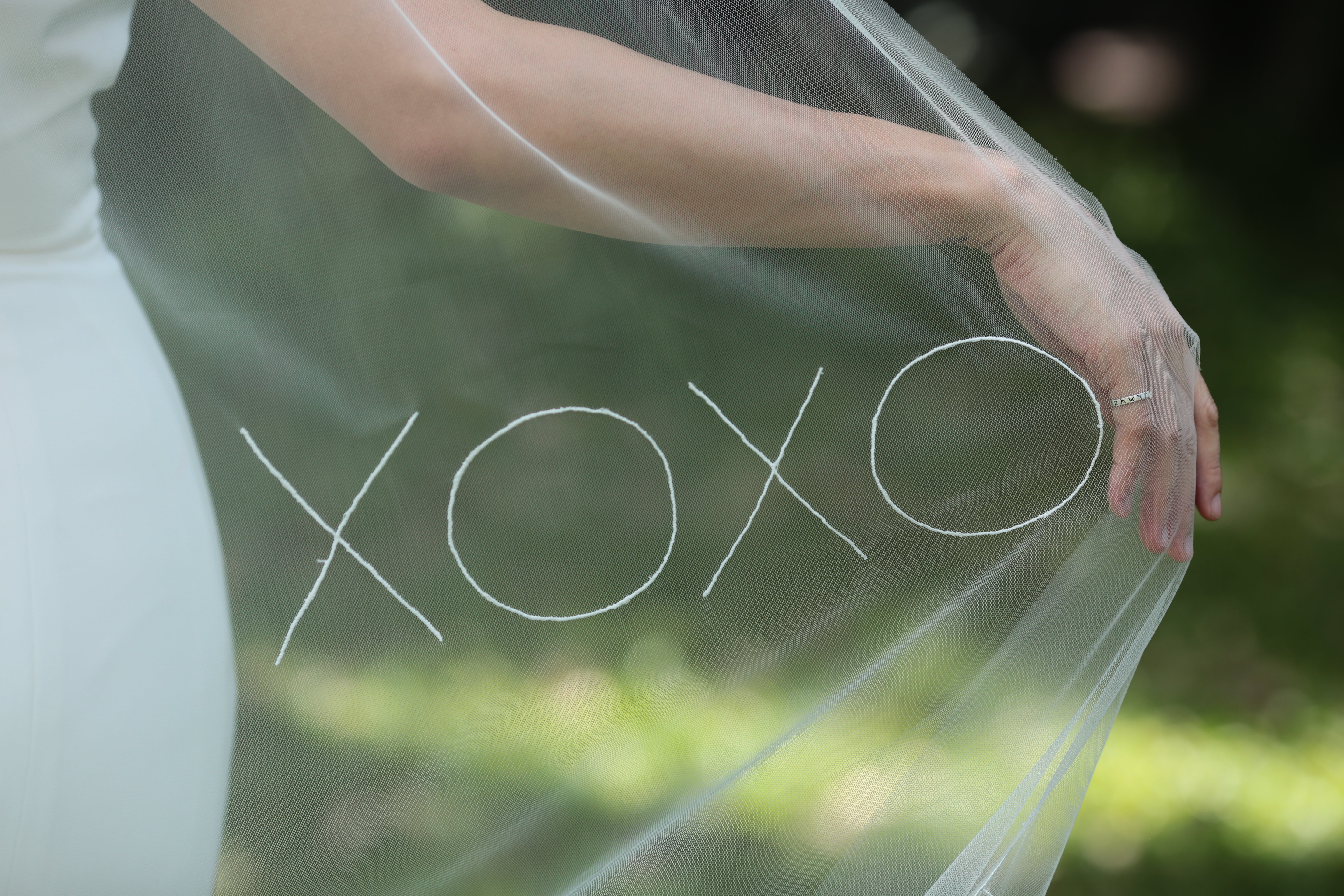
An embroidered veil uses thread alone, with no applied flowers, to draw a scene or motif onto the tulle. It is the most personalisable category in our catalogue because the motif can be anything we can sketch, including initials, a meaningful line, or a constellation. The embroidered wedding veils collection shows our standard motifs; bespoke embroidery is available on request.
Choosing by attachment: drop, comb, mantilla, blusher
A wedding veil attaches to the head in one of four ways, and the choice affects both styling and how the veil moves.
A drop veil has no comb and no gathering. The fabric simply lays over the head, falling evenly to the front and back. It is the most modern choice and the easiest for photographs of the bride entering the ceremony. The Rosie floral drop veil shows the silhouette clearly.
A comb veil is gathered onto a hidden comb that slides into the bride's hair. It is the standard attachment in our catalogue and works with most hairstyles, from a low bun to soft waves. A mantilla veil is a single layer with a finished lace border running all the way around the edge, draped from the crown and framing the face like a hood. It is the most traditional silhouette and reads beautifully in old churches.
A blusher is the short front layer that covers the face during the processional and is lifted before the vows. Almost any of our wedding veils can be made with or without a blusher; if you want one added to a design that does not show it in stock photography, choose the add a blusher option at checkout.
Choosing by colour: ivory, white, blush, champagne, black
Veil colour is rarely a simple matter of matching the gown. Pure white photographs cool, sometimes blue, under tungsten light. Ivory, our most requested shade, is a warm off-white that flatters most skin tones and reads true to colour on camera. Blush and champagne shift the veil from neutral to soft accent and tend to suit brides whose gowns already have a warm cast.
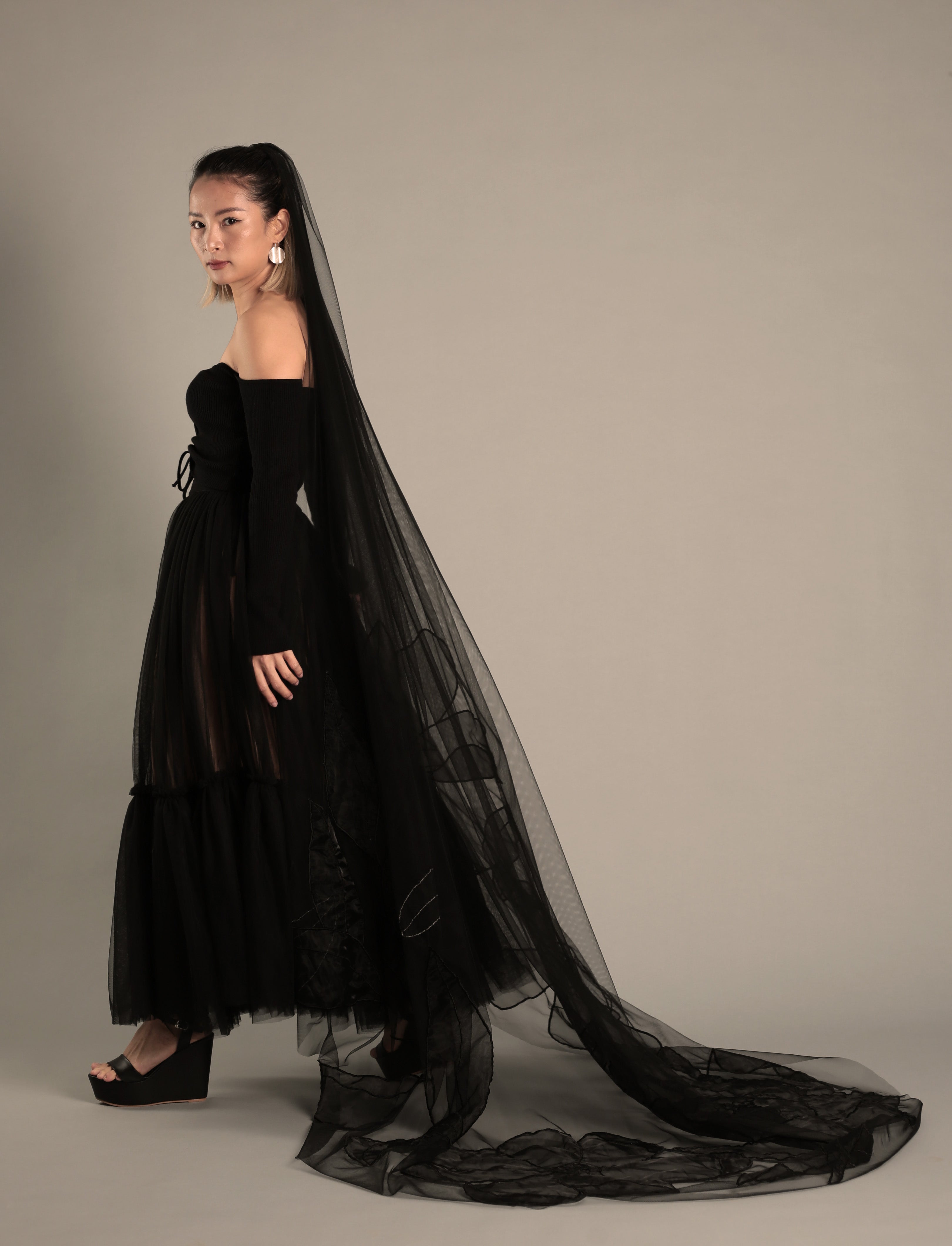
Black wedding veils are a small but loyal corner of our work; the black floral wedding veil is the design most brides start with. For brides who want a clean ivory cathedral with no embellishment, the ivory cathedral veils collection is the right starting point. If you are unsure how a colour will read against your gown, send us a swatch photograph and we will match by eye before cutting.
Choosing your wedding veil by venue
The room you are walking through changes what the veil should do. A church ceremony with stained glass and a long aisle can carry a cathedral length veil with substantial trim. A garden ceremony in late afternoon light usually photographs best with a soft chapel or fingertip in tulle that catches the breeze without fighting it. A beach ceremony is the most demanding setting, because wind is the protagonist; we recommend a fingertip or chapel length in lightweight organza and have written a detailed guide on choosing veil length for a beach wedding that covers wind, sand, and how the fabric photographs against open water. A civil ceremony or city hall appointment is the natural home for a short, playful veil; the short wedding veils collection is built for that brief.
Sizing and customisation
Every Tara Bridal wedding veil is made to order, with length, width, and trim confirmed before we cut. Standard widths run from 54 to 108 inches, and standard lengths run from 24 inches (birdcage) to 144 inches (royal cathedral). Anything in between is available on request. If you want to design from a clean sheet, the custom wedding veils collection is where to start, and our team will work with you one-to-one on motif, fabric, and proportion.
Hairstyle matters more than most brides expect. Read our guide on wedding hairstyles with veil and headpiece before you choose your attachment, because a low bun supports a heavier veil differently than soft waves, and a tiara wants a drop veil rather than a comb.
Ordering and timeline
Production time depends on the design. A plain tulle veil with a finished edge ships in roughly two weeks from order confirmation. A lace bordered chapel or cathedral takes three to five weeks. A fully embroidered or 3D floral design can take six to eight weeks because each motif is placed by hand. Rush orders are accepted on most designs for a fee; the option appears at checkout when your design qualifies.
Shipping is worldwide and tracked. North America and Europe typically receive their veil within three to five business days of dispatch. Each veil ships in a fitted box that doubles as long-term storage.
Care and storage after the wedding
A wedding veil is meant to last beyond the day. After the ceremony, hang it on a padded hanger and let the fabric relax overnight before folding. Spot clean any marks on the hem with cool water and a clean white cloth, working from the underside. Do not machine wash. For long-term storage, return the veil to its original box layered with acid-free tissue, and keep it in a cool dry cupboard out of direct sunlight. Tulle, lace, and silk all yellow under UV, and a well-kept veil should outlive the wedding by a generation.
Frequently asked questions
How long does a custom wedding veil take to make?
A plain or lightly trimmed veil ships in about two weeks. A lace or beaded design takes three to five weeks. A fully embroidered or 3D floral design takes six to eight weeks, because each motif is set by hand. Add international shipping time on top of production. Rush production is offered on most designs and is selectable at checkout when available.
What is the price range for a Tara Bridal wedding veil?
Our wedding veils span a wide range, from short reception-friendly veils through fully hand-embroidered cathedral pieces. The exact price for each design appears on its product page and reflects the materials and hours of hand work involved. Custom briefs are quoted individually after a short consultation with our team.
How do I choose the right wedding veil length?
Start with the venue and the gown. Long aisle and formal church, consider cathedral. Most other ceremonies, chapel length is the safest beautiful choice. Reception-led day or beach ceremony, fingertip or shorter. Our wedding veil length chart shows every length on the same model for honest comparison.
Can I add a blusher to any veil style?
Almost always, yes. If you have found a design you love that is photographed without a blusher, add the add a blusher option to your order or mention it in the notes at checkout, and we will build the blusher in the matching fabric and trim.
What is the difference between a drop veil, a comb veil, and a mantilla?
A drop veil lays flat over the head with no attachment hardware. A comb veil is gathered onto a hidden comb that slides into the hair. A mantilla is a single layer with lace running all the way around the edge, draped from the crown rather than gathered. Each suits a different hairstyle and ceremony vibe.
Do you ship worldwide and how is the veil packed?
Yes. We ship from Hanoi to addresses worldwide, with tracked courier service. Each veil is folded in acid-free tissue inside a fitted box that doubles as long-term storage, so you do not need to buy a separate keepsake box.
Can my veil be made in a colour that is not ivory or white?
Yes. Standard shades are pure white, ivory, blush, champagne, and black. Custom dye colours are available for embroidered and floral designs; send us a swatch photograph and we will colour-match before cutting.
What if I want a design that is not in your catalogue?
Start with the custom wedding veils collection and use the contact form on any product page to send us a sketch, an inspiration image, or a written brief. A member of our atelier will respond within one business day with proposed materials, a timeline, and a quote.