Cart
0
You may also like


A wedding veil is the single piece of bridal dress that carries the most memory, the most movement, and often the most emotion on the day itself. It is the length of sheer fabric that frames the bride from the crown of the head down along the back, and sometimes far beyond the hem of the gown. What a wedding veil is really made of, though, is the quiet answer to almost every question brides ask us at the atelier. The fabric you choose will decide how your veil catches light in the aisle, how it drapes across your shoulders in the portraits, and how it behaves when the wind on the terrace picks up. This guide walks you through the materials we work with most often at Tara Bridal, how each one feels, how it photographs, and how to match it to your gown and venue.

The bridal veil is one of the oldest pieces of wedding dress in recorded history, worn in ancient Rome to protect the bride from spirits, woven into heavy cloth in medieval Europe as a sign of modesty, and re-imagined in the Victorian era as a fine, fluid symbol of light and air. Queen Victoria herself chose a long veil of Honiton lace in 1840, and many historians credit her with shifting bridal fabric expectations from opaque silk to transparent, patterned lace and fine tulle. The meanings have softened over the centuries, but the instinct has stayed the same. A veil is worn to transform a walk across a room into a moment, and the fabric is what makes that transformation believable.
At Tara Bridal we cut, embroider, and finish every veil by hand in our Hanoi atelier. Over the years we have narrowed the fabrics we stock down to five, because these are the five that consistently move, photograph, and wear the way brides hope a veil will.
Silk tulle is the most refined tulle in the bridal world and the one many couture houses reserve for their most important gowns. The fibre is drawn from mulberry silk cocoons and woven into a fine hexagonal mesh that feels weightless in the hand, slightly warm against the skin, and very slightly creamy in tone rather than stark white. Silk tulle drapes with a slow, liquid fall. When a bride turns in it, the veil lags a half second behind her shoulders and then settles, which is the exact behaviour that makes silk look so cinematic on film. In natural light, silk tulle absorbs and softens highlights instead of bouncing them back, which is why portraits taken in afternoon sun have that painterly, low contrast glow. Silk tulle is the right choice for a bride who wants her veil to feel like breath on the shoulders rather than a separate garment, which is why we reach for it most often in our luxury wedding veils collection.

Polyester and nylon tulles are the workhorses of the bridal veil world, and a well chosen soft tulle is in no way a compromise. The best grades of polyester tulle are whisper light, evenly woven, and come in a truer white than silk. This tulle has a crisper hand, holds a gathered edge more confidently, and resists crushing in transit, which is why it is the right fabric for destination weddings, beach venues, and any bride who plans to dance in her veil rather than remove it after the ceremony. Polyester tulle photographs bright and clean with a slight sparkle under direct light, which suits the clean lines of our modern wedding veils and the pure white satin, crepe, or mikado gowns they are usually worn with.
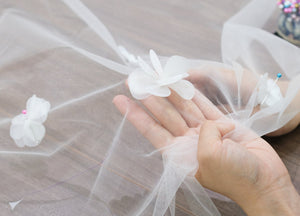
Organza sits between tulle and taffeta in weight and personality. It is a plain weave fabric, usually spun from silk or a silk and polyester blend, with a faint sheen and a papery, structured hand. Organza drapes in wider, sculptural folds rather than the close, skimming drape of tulle, and this is the fabric we reach for when we want a veil to hold an embroidered motif or a 3D applique away from the body. A cathedral wedding veil in hand cut organza carries its own architecture down the aisle and keeps its shape even in a still, indoor cathedral. Organza also takes embroidery beautifully, which is why our most detailed pieces in the embroidered wedding veils range, including botanical and ocean inspired designs, are cut from it.

Chantilly lace is a fine bobbin lace, originally woven in the French town of Chantilly in the 17th century, distinguished by its delicate floral motifs set on a very fine hexagonal mesh ground. Real Chantilly is soft, supple, and almost weightless, with the dense areas of pattern reading as smoky rather than solid, a quality you can see across our ELA lace wedding veil and other pieces in the same family. A Chantilly lace veil is a heritage choice, the fabric most often cut from grandmothers' veils and redesigned for a new bride, and it carries an unmistakable air of quiet formality. Because the mesh ground is so fine, Chantilly drapes softly even at long cathedral lengths, which is a pleasant surprise for brides who expect lace to feel heavy. Chantilly photographs with more texture than plain tulle, so it rewards close up portraiture and the moment when a groom lifts the veil.

When brides say they want a lace wedding veil with a defined, couture edge, they almost always mean French lace, usually Alencon. Alencon is a corded lace, which means the motifs are outlined in a fine raised cord that gives the pattern a three dimensional quality and a firmer hand than Chantilly. French lace is the right lace for a bride who wants to see the pattern clearly in photographs, who wants the hem of the veil to read as a sculpted edge rather than a soft fade, and who wants the fabric to hold up to a full day of wear. We often apply scalloped Alencon trims onto a soft tulle base to give brides the drape of tulle with the statement edge of French lace.
Fabric and length are always chosen together, because the same material behaves very differently at a fingertip length than it does at a cathedral length. A fingertip veil, which falls to the tips of the fingers when the arms are relaxed at the sides, is short enough to carry dense fabrics like Alencon or all over Chantilly without ever feeling heavy. A chapel length veil, which grazes the floor behind the bride and extends a modest distance beyond the train, is the most forgiving length in almost any fabric and the length most brides return to when they are unsure. A cathedral length veil, which extends a metre or more past the end of the train, is where fabric decisions matter most. A cathedral in silk tulle floats. A cathedral in heavy corded lace drags and requires help from the bridal party on every step. For a full breakdown of lengths, we recommend reading our chapel veil vs cathedral veil guide before making the final call.
A veil that works is a veil that belongs to the dress it is worn with and the room it is worn in. Three quiet rules guide our recommendations at the atelier.
First, match fabric weight to dress weight. A heavy satin mikado gown with a structured bodice pairs naturally with organza or soft tulle, which give the veil enough presence to balance the gown. A light silk charmeuse or chiffon gown wants an even lighter silk tulle veil so the bride reads as one continuous line rather than as a dress with a separate veil hanging behind it.
Second, match fabric texture to dress texture. If the gown is heavily embroidered or beaded, choose a plainer veil in soft tulle and let the dress carry the pattern. If the gown is clean and minimal, the veil can carry the ornament, whether that is a scalloped French lace edge or a scattered 3D floral embroidery. The rule we come back to in the atelier is that the eye should rest on one story at a time.
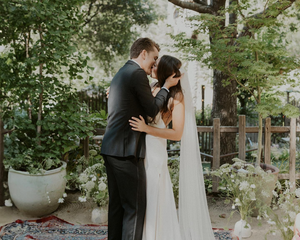
Third, match fabric behaviour to venue. A cathedral ceremony with still air and a long aisle can hold the slow drama of silk tulle or heavy French lace. A garden ceremony, a beach wedding veil setting, or an open terrace rewards a lighter polyester tulle that will lift in the wind and settle cleanly instead of knotting. An indoor evening reception lit by candles is the moment silk tulle earns its reputation, because the fibre diffuses warm light into a soft halo around the bride.
Every veil in our studio begins as a bolt of fabric, a sketch, and a conversation with the bride. We cut each layer by hand, shape the curves with a warm iron rather than a machine, and hand stitch every applique, every scattered pearl, and every embroidered petal. Customisation timelines at Tara Bridal typically run 8 to 15 weeks, which gives us the room to match a veil not only to a specific gown but to a specific ceremony, a specific light, and a specific way the bride wants to move. Handmade is slower on the calendar and slower on the shoulder, and that is the point.

Most wedding veils are cut from a single bolt of sheer fabric chosen for its drape and its light. The most common materials are silk tulle, polyester tulle, organza, Chantilly lace, and French lace. Each one behaves differently in the hand and on camera, which is why the fabric decision is really the first design decision of the whole veil.
There is no single best material because the right fabric depends on your dress, your venue, and the length you have in mind. Silk tulle is the most refined choice and moves like breath on the shoulders. Soft polyester tulle is lighter on the scalp and more forgiving in wind. Lace, whether Chantilly or French, carries pattern and edge detail. At Tara Bridal, we match the fabric to the silhouette you have already fallen for rather than the other way around.
Silk tulle and soft nylon or polyester tulle are both tulle, just different fibres. Silk tulle has a warmer ivory cast, a slower fall, and a richer hand, which photographs with a soft, painterly quality in natural light. Polyester tulle is crisper, whiter, and holds a gathered edge more firmly, which suits modern gowns and structured silhouettes. Neither is objectively better. They simply tell different stories.
Both are traditional in different eras and regions. Lace veils, especially Chantilly lace and heirloom French lace, trace back to European bridal ceremonies of the 17th and 18th centuries and carry a formal, ancestral feeling. Tulle became the dominant bridal fabric from the early 19th century onward because it was lighter, more affordable, and easier to extend into long cathedral lengths. A lace veil reads as heritage. A tulle veil reads as romance.
Store the veil flat or gently rolled on a cardboard tube wrapped in acid free tissue, never folded on a sharp crease. If wrinkles appear on the morning of the wedding, use a handheld steamer held about 15 centimetres from the fabric and always test on a corner first. Avoid direct iron contact with silk tulle or lace, and keep the veil away from fragrance and hair spray until the last moment.
Yes, and this is the part most brides discover too late. A cathedral length veil in heavy lace drags slowly and sweeps the floor with weight. A cathedral length veil in silk tulle floats behind you and lifts on the slightest breeze. Shorter veils such as fingertip or elbow lengths can carry denser fabric without becoming cumbersome, while longer chapel and cathedral veils tend to read best in lighter weight tulle or organza.
You can, but the two laces need to speak to each other rather than compete. Match the scale of the motif so the lace on the veil is either visibly smaller or visibly larger than the lace on the gown. Match the tone of the thread within a few shades. If the dress is heavily patterned from bodice to hem, consider a lace edged veil on plain tulle instead of an all over lace veil so the face and neckline still read clearly.

Hoa is the founder and owner of Tara Bridal, bringing over seven years of experience in designing bespoke wedding veils for more than 3,000 brides worldwide. Passionate about helping brides shine with a unique style, she brings fresh ideas into each accessory, breaking traditional molds. Hoa understands the fatigue and time-consuming search that brides face when looking for wedding veils online, which is why she strives to create a seamless and enjoyable shopping experience. She creates stunning veils that beautifully reflect each bride's individuality by blending global fashion trends with exquisite hand embroidery from skilled Vietnamese artisans.